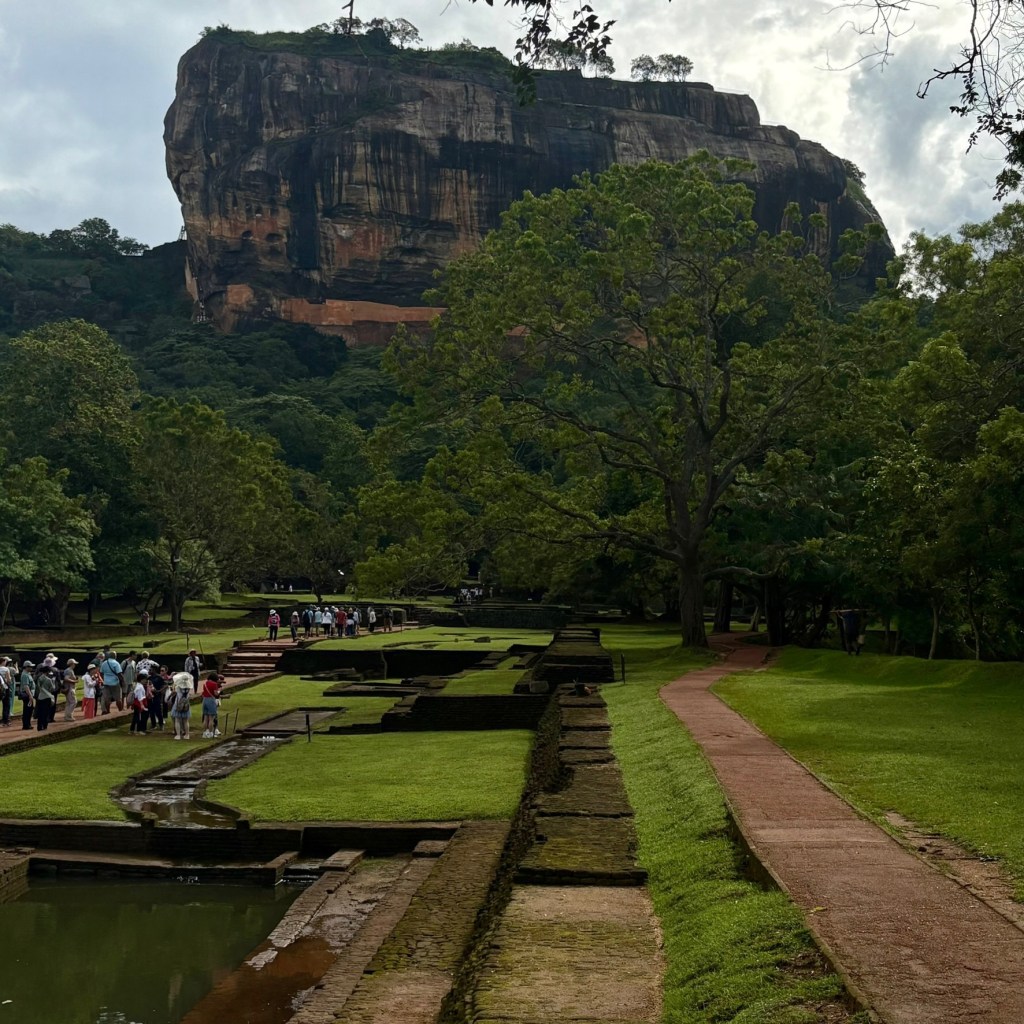
The sight of Sigiriya, a massive monolithic rock, rising up out of the surrounding forested plane is impressive. It is a major archaeological site and is listed in the World Heritage Sites and Monuments. It is believed to date from the 5th century and is magnifenctly designed and laid out.
The centre of the city was The Royal Palace which was located on the top of the rock .The basic layout and ground plan are still discernible in a terraced format and can only be described as impressive and awe inspiring. The level of work required, its precision and detail and the skill of the workmanship and engineering are reminsiscent of some of the other great structures of the ancient world. The question that keeps recurring in our minds is why in the modern world we are not able to repeat or harness those skills in our everyday?
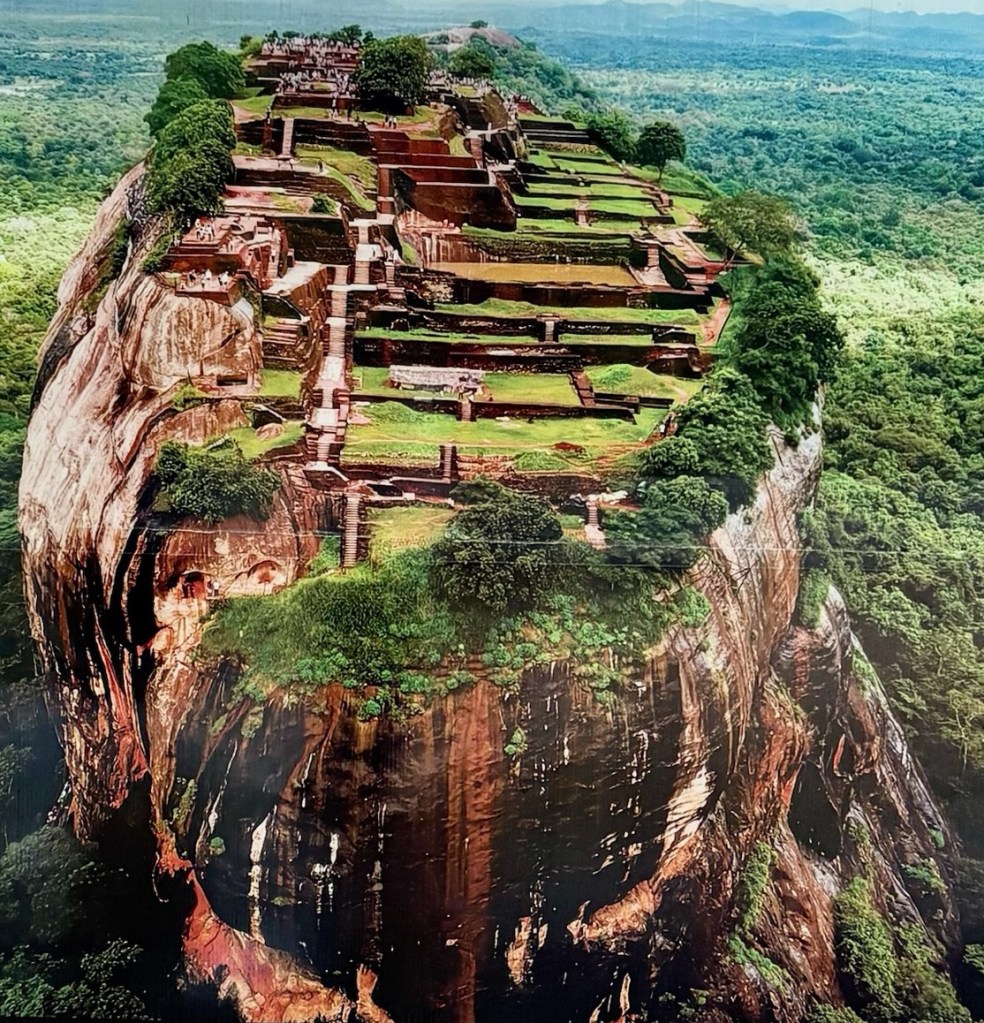
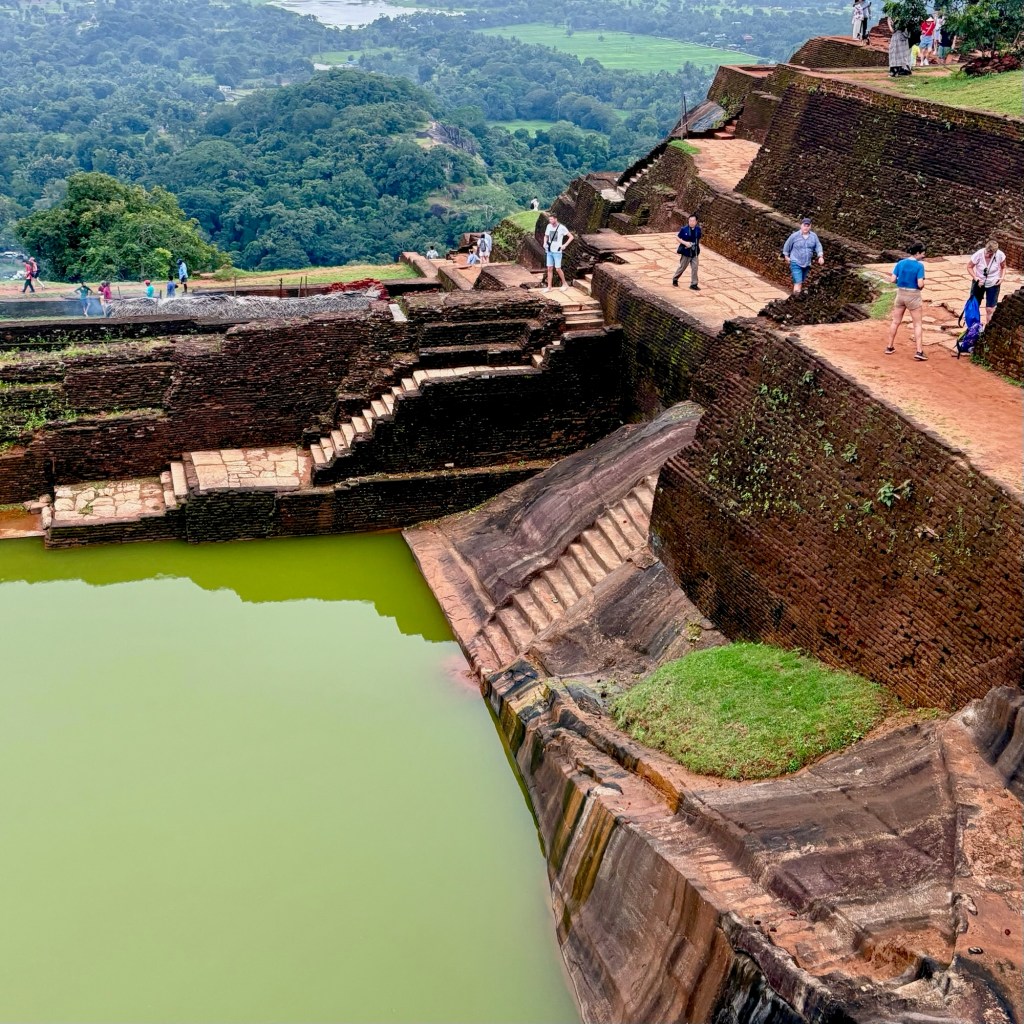
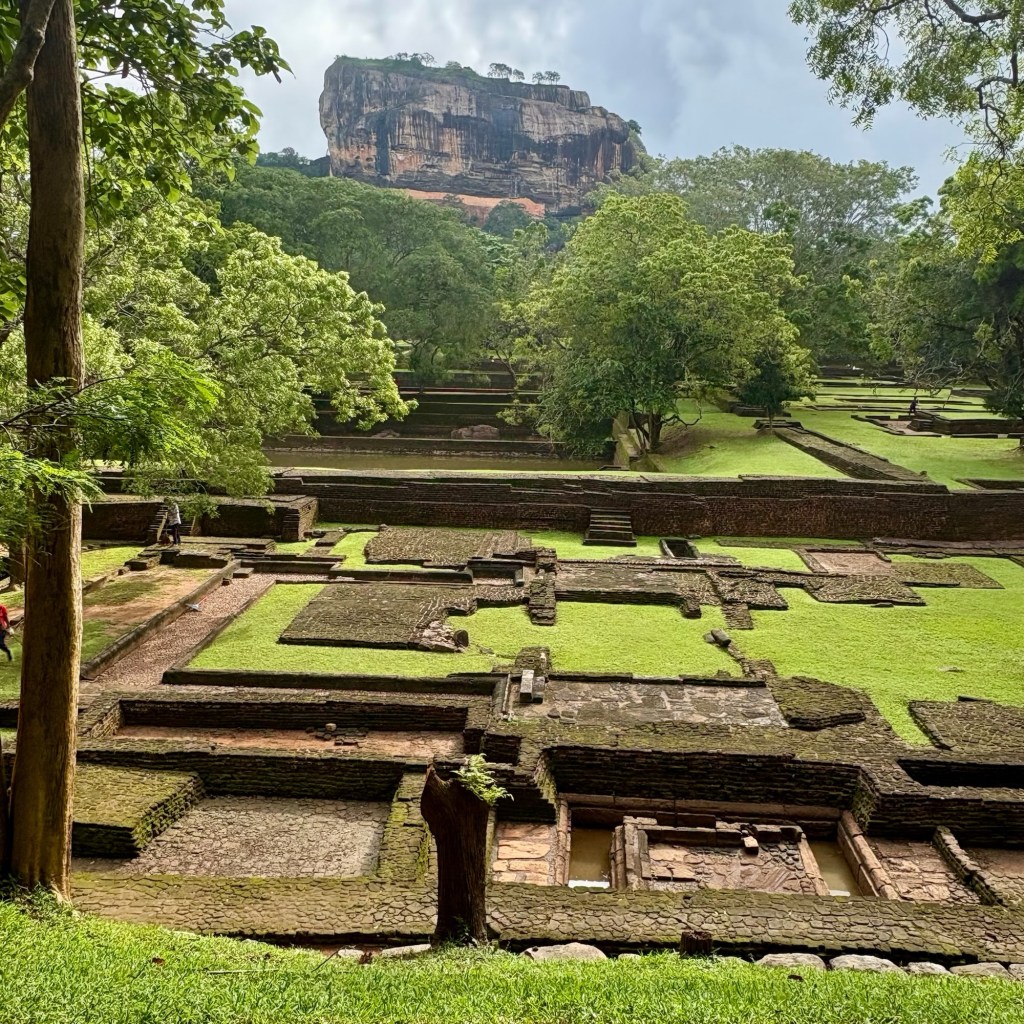
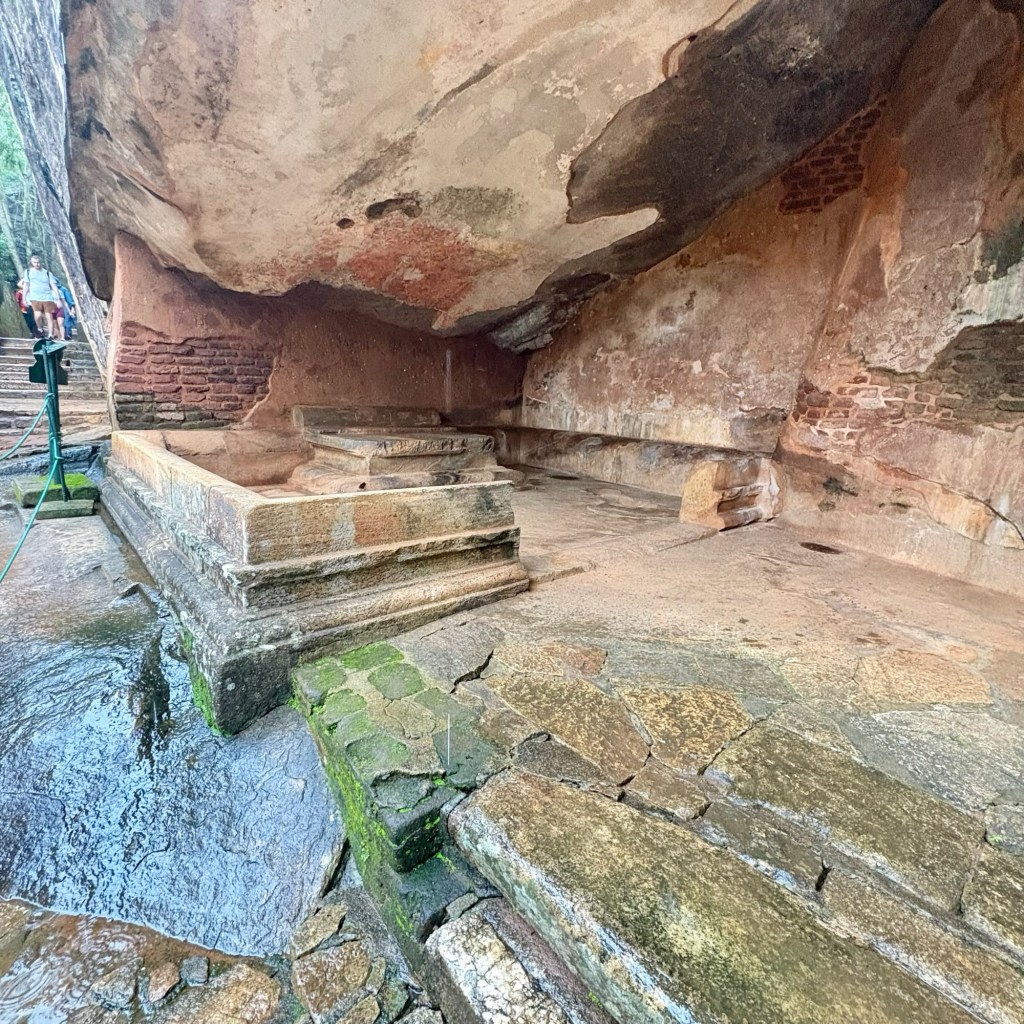
Access to the site must have been, and still is, a challenge. The extent of the palace and fortress area spreads across the larger area of the lower slopes of the rock past landscaped gardens, moats and ramparts with an attractive winding path leading to the north terrace of the rock and the Lion Staircase.
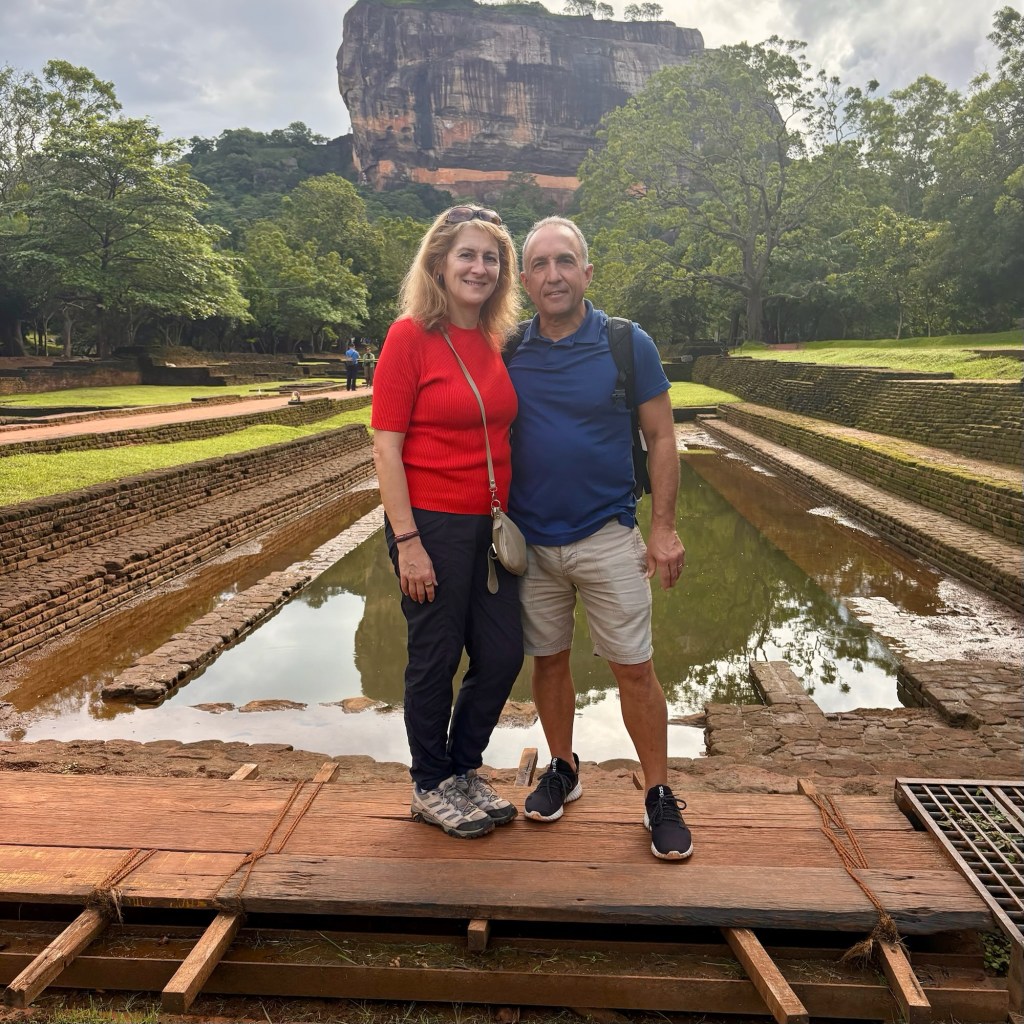
The gardens, consisting of water gardens, cave and boulder gardens and terraced gardens encircling the rock are deemed to be one of the oldest landscaped gardens in the world. They include water gardens, with still functioning ancient fountains.
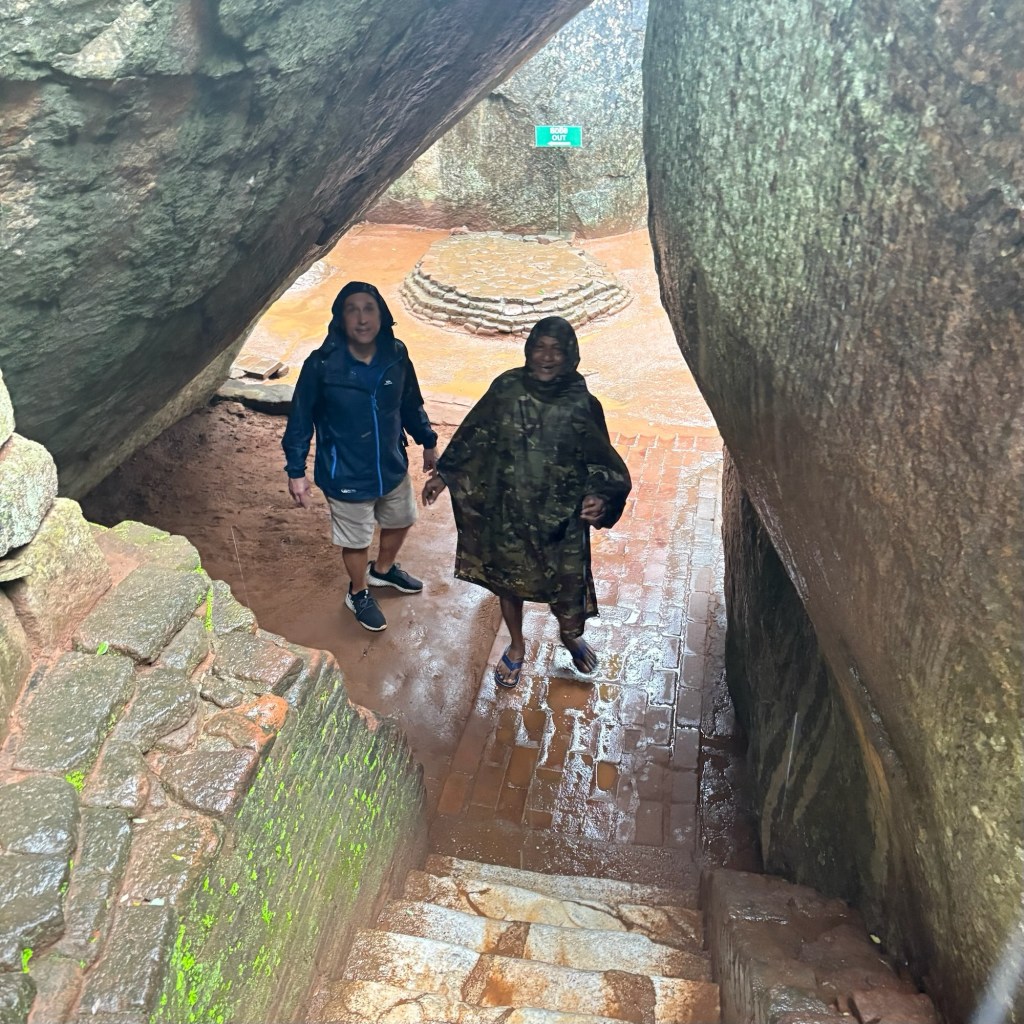
The Lions Gate is the entrance to the final climb to the top. It is the most difficult and steep section. The name of the rock is derived from the Sinhalese word for Lion rock – Sinhagiri. Anyone with a fear of heights, even a mild fear, will need to dig deep to undertake the somewhat crowded ascent to the very top. After passing between what remains of the great lion – 2 massive paws with claws – access is by way of a steel set of steps that winds up the side of the rock. Those ascending and descending occupy the same structure for approximately half of the undertaking and there are rails to hold onto for the nervous. It would be misleading to suggest it was anything other than a free for all and perhaps a little overcrowded. We encountered children, families, stray dogs and mature adventurers on the expedition to the top.
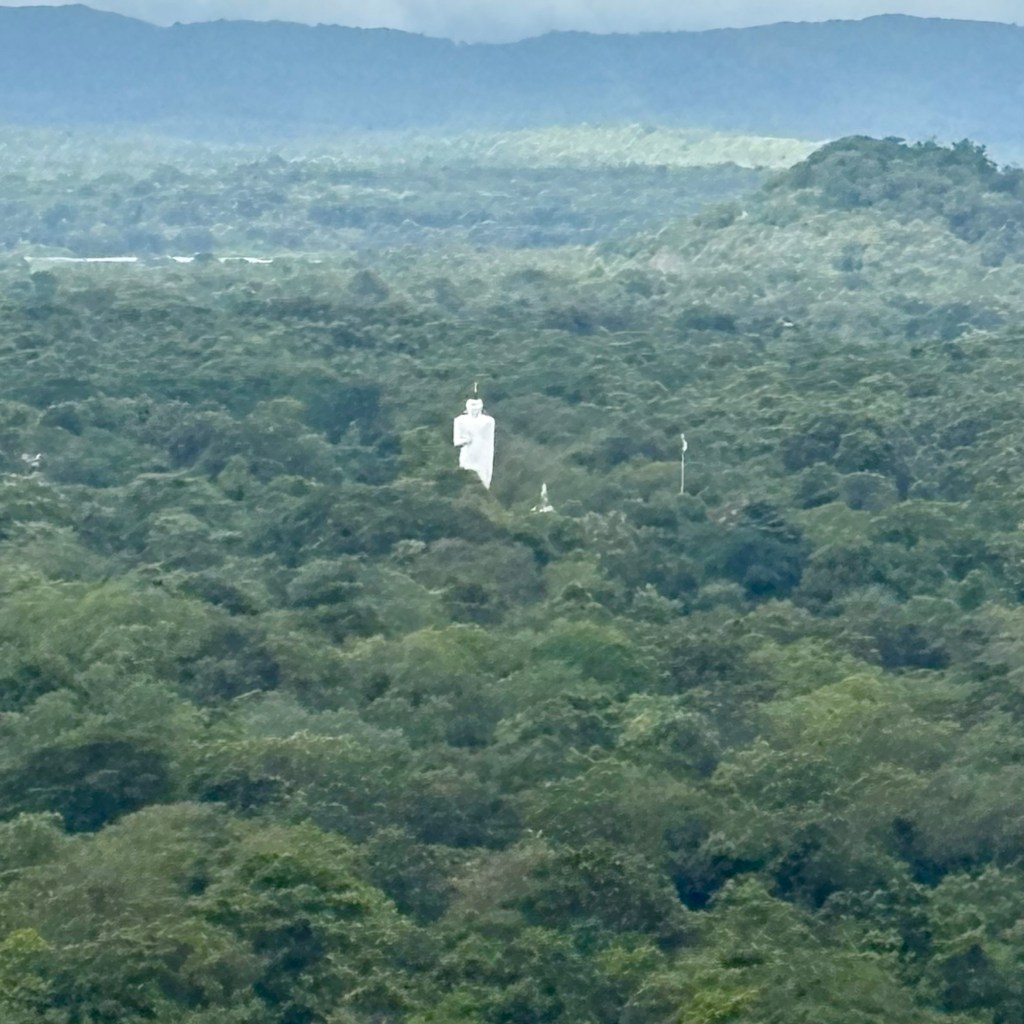
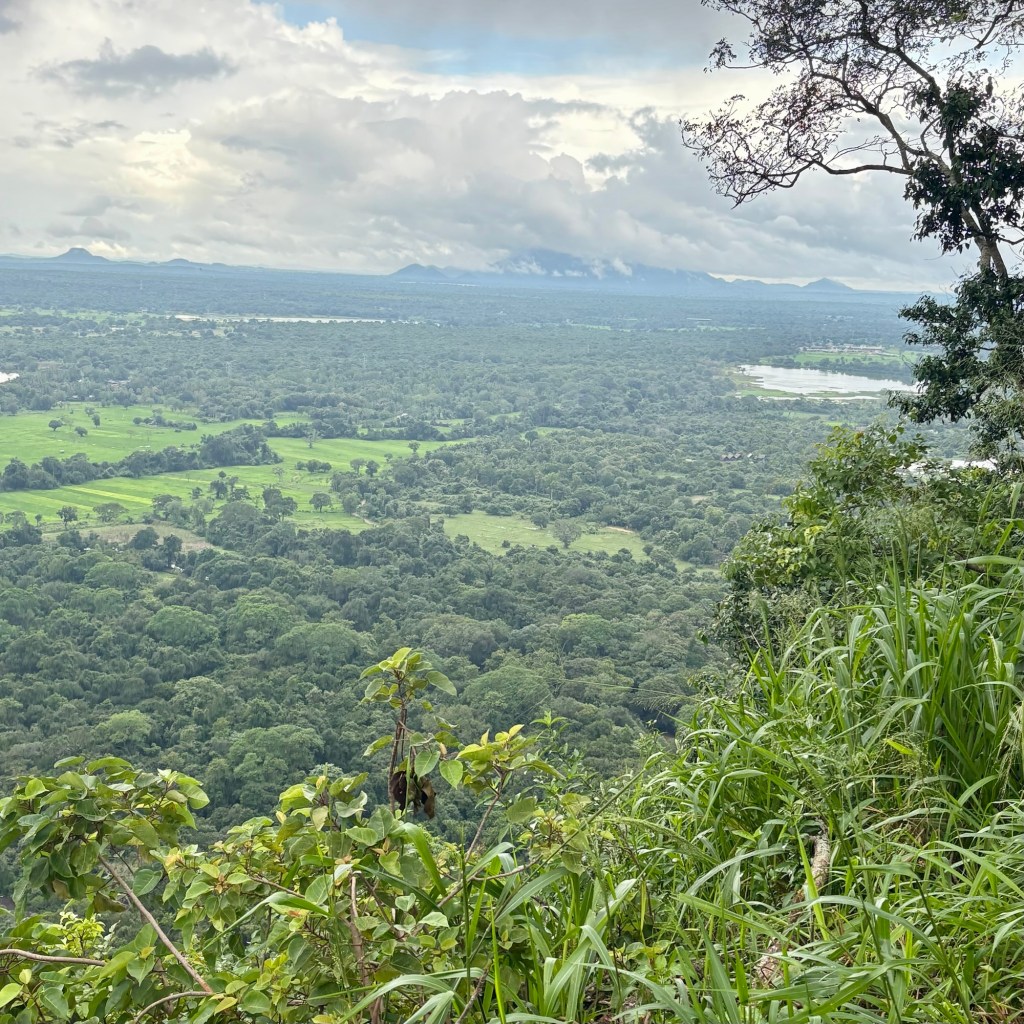
Is it worth it – absolutely! The achievement of what was constructed and the 360 views all round are a sight to behold.
Sadly no pictures of the Lions Gate – I was otherwise engaged with contemplating the undertaking ahead of me! google it if intrigued.

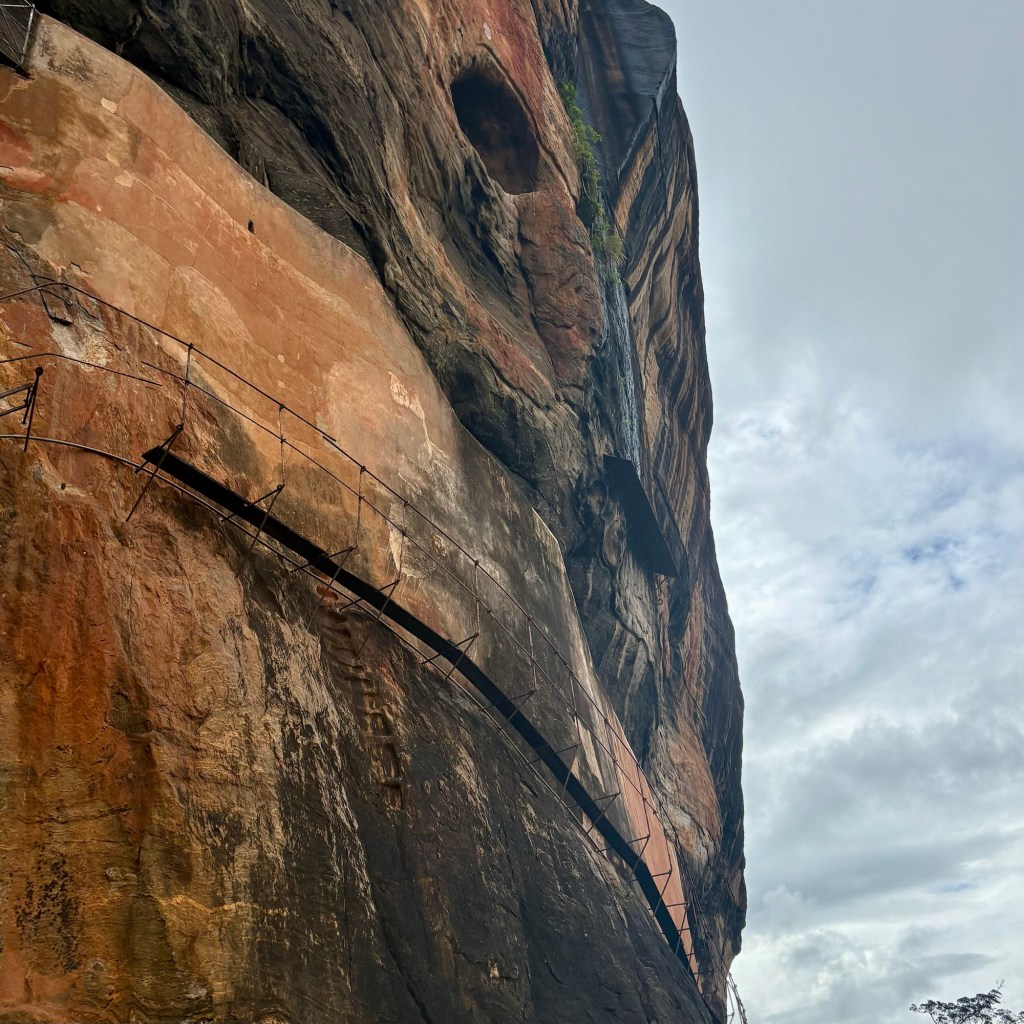
There are two other notable features on the rock, the first is a wall built along one side with brick masonry. Its surface is highly polished plaster and is known as the “mirror wall.” Was this created so the king could see his reflection? The wall is now embellished by the ancient equivalent of graffiti.
A depression in the rock contains the remains of some fifth century wall paintings. They are known as the Sigiriya frescoes and depict women of various ages and ethnicity. The detail is impressive but for those who do not wish to attempt the metal circular staircase that provides access to the caves, there is a good reproduction in the museum on the grounds.
Sigiriya is a worthy addition to any trip to Sri Lanka.

 Phil and Carolynn's travel adventures
Leave a comment