The scale of the two ancient cities discussed in this post is a wonder to behold. The fertility of the soil, the climate and the abundance of water contributed greatly to the size of these cities. Like many ancient civilisations huge numbers of people would have been required to build and sustain these cities. The country has a documented history starting approximately 2,500 years ago and at some time prehistorically was likely connected culturally with southern India.
The Sinhalese history starts around 500BC (the majority population of Sri Lanka is Sinhalese, with sizable Tamil, Muslim and Christian minorities) with, it is believed, the arrival of a semi legendary prince and his followers from Bengal. The ancient Sri Lankans exceled at building, engineering and water management. The history about the kings, the dynasties and their various contributions to the archaeology and spiritual journey of Sri Lanka is long and complicated.
The country incorporates modern aspects of life with traditional elements. Buddhism is the main influence among the Sinhalese in the central and southern part of the island and contributes to the seemingly harmonious existence of the population we observed in Sri Lanka throughout our visit.
It is of course well documented that there have been tensions in the past and we did not visit any areas north of Anauradhapura. This post documents only our own experiences, impressions and observations.
Anuradhapura
Anuradhapura was Sri Lanka’s ancient capital for over 1,300 years. It is the cradle of Theravada Buddhism and the Sinhalese civilization. A UNESCO World Heritage Site the city was founded in the third century BC by the first Sri Lankan born king who was named Pandukabhaya. The city is a veritable trove of monastic sites containing all manner of temples, stupas, hospitals, chapter houses(administrative buildings), refectories, image houses and dormitories. Also situated at the heart of Anuradhapura is the sacred Bodhi tree which makes the ancient city a continuing pilgrimage centre.
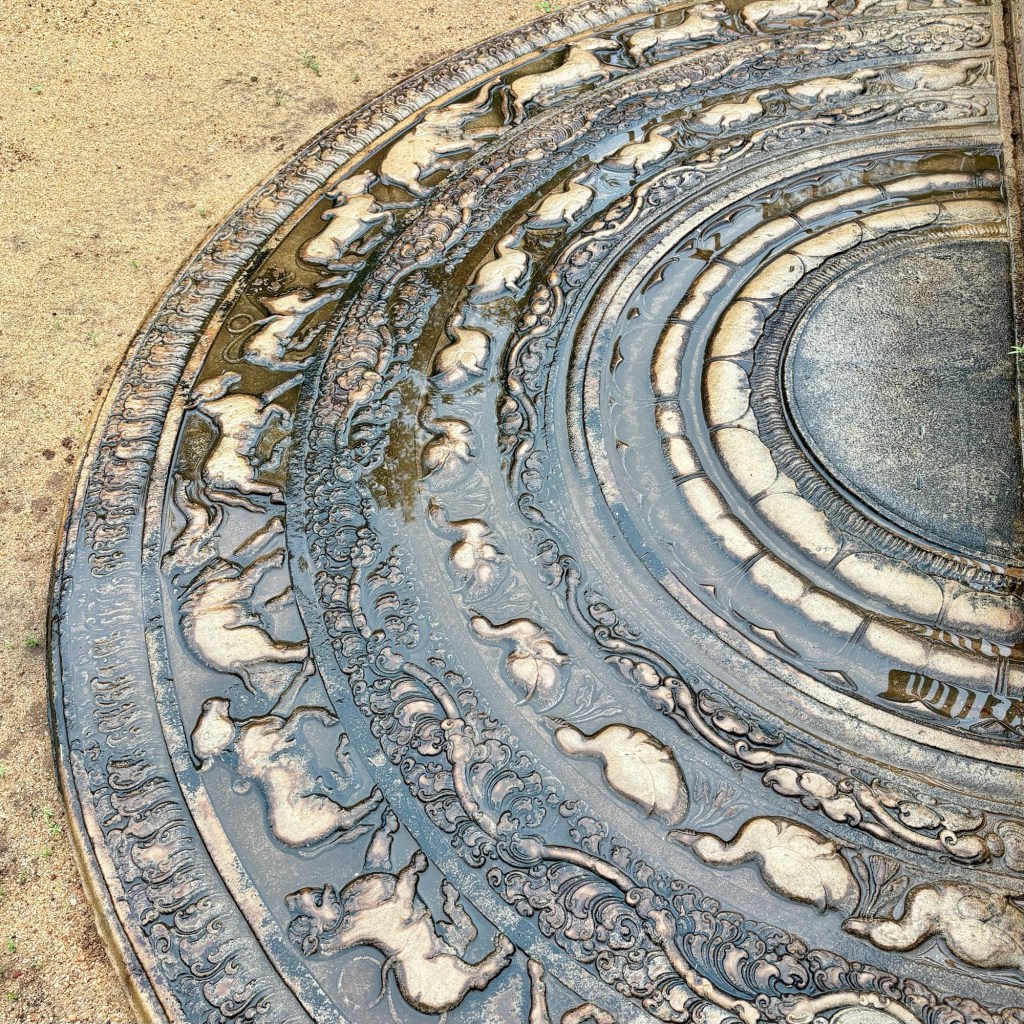
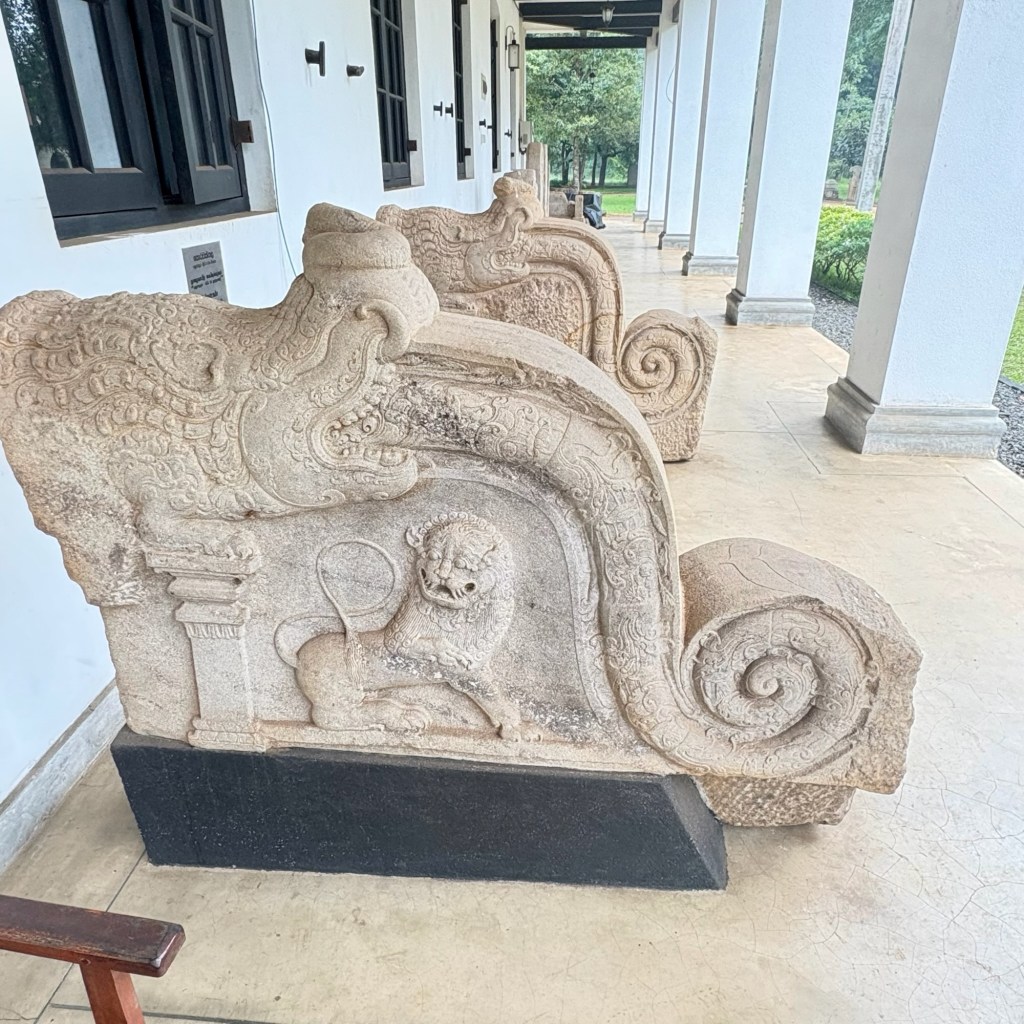
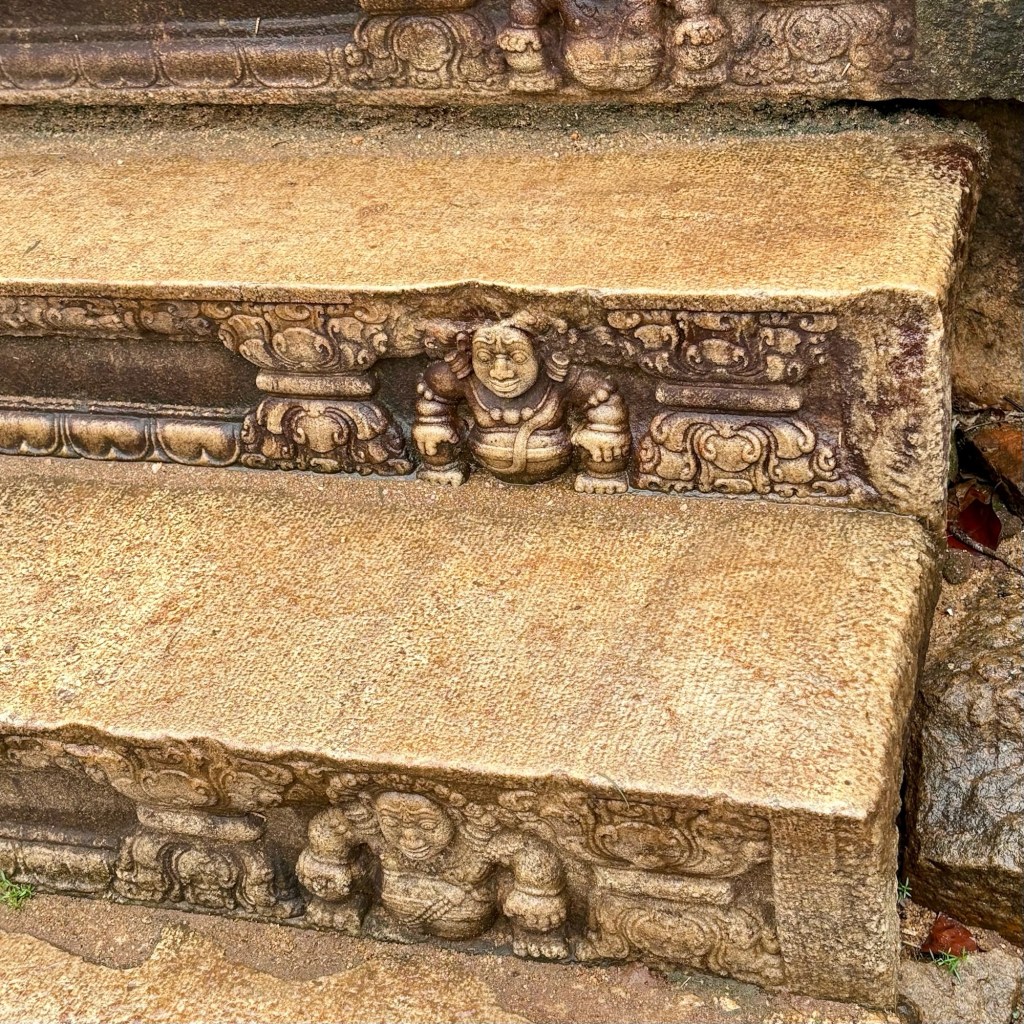
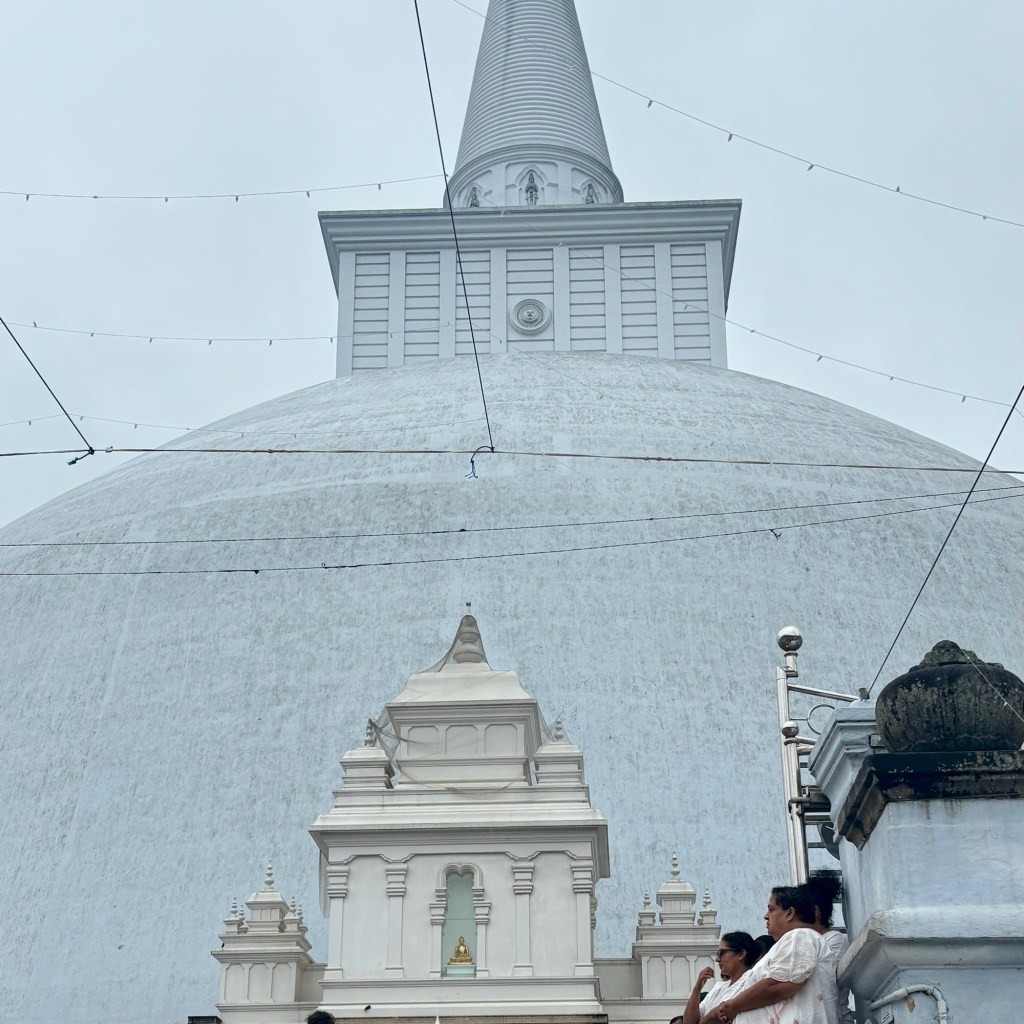
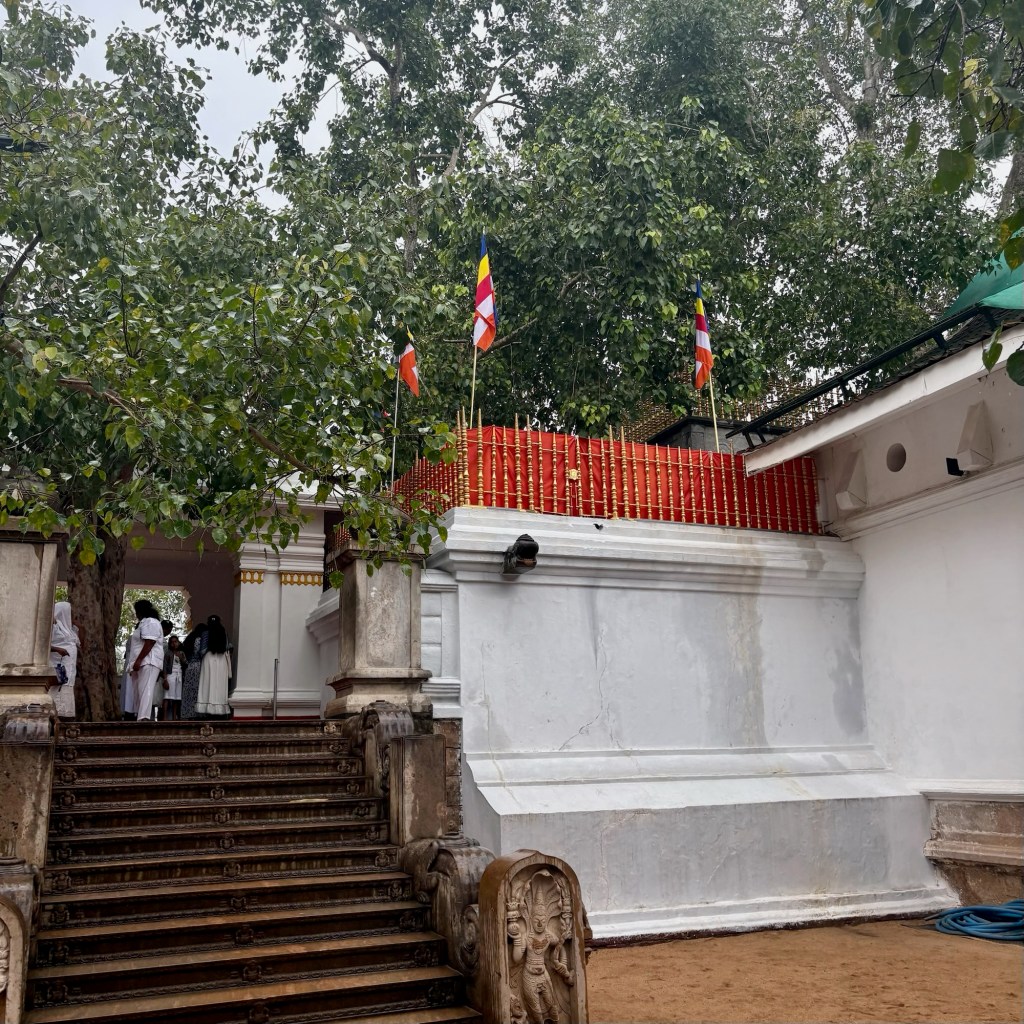
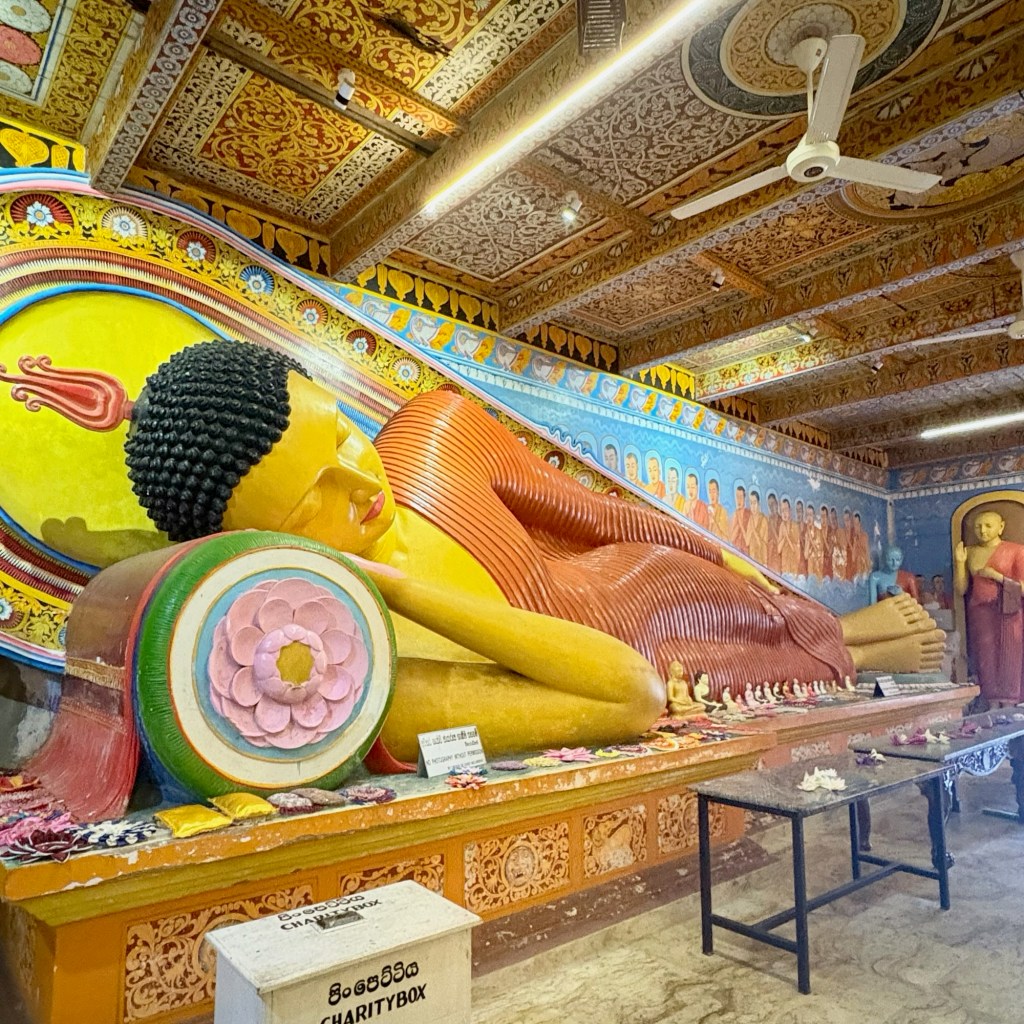
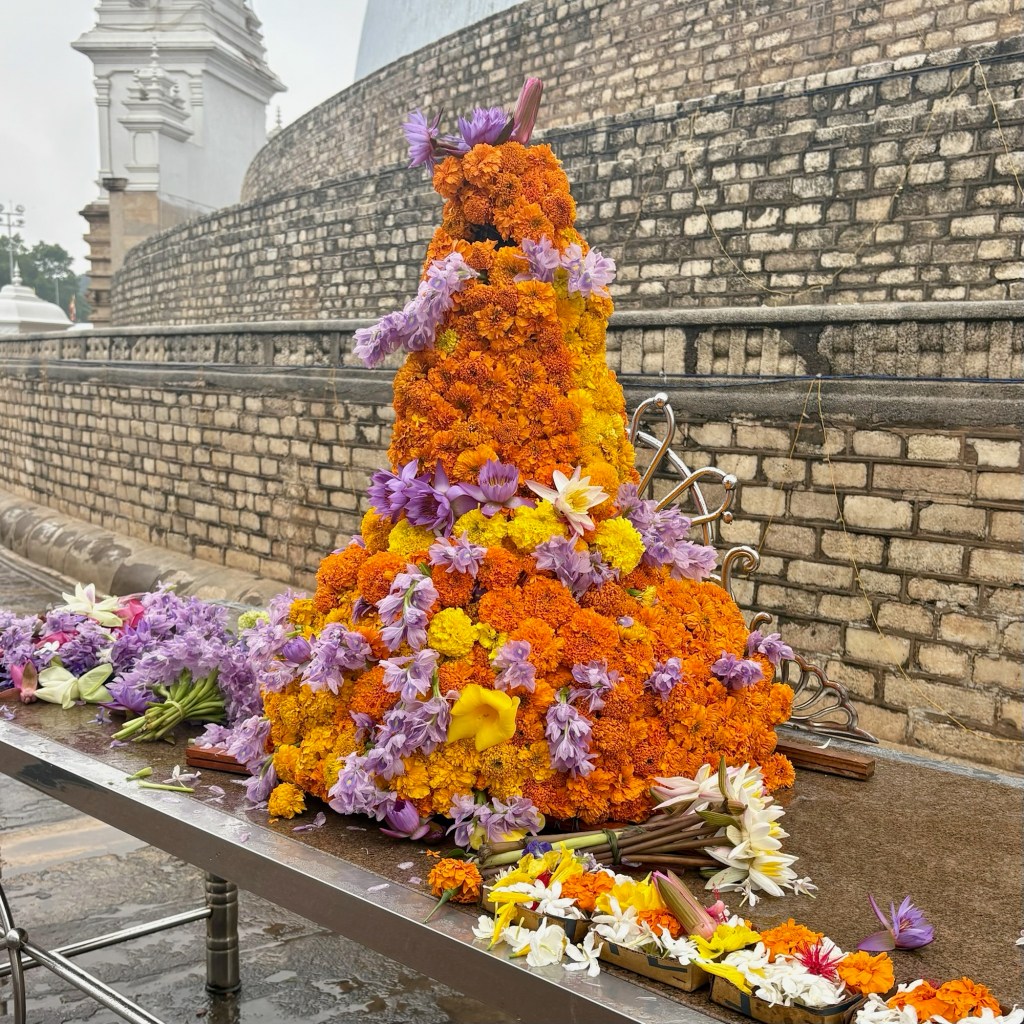
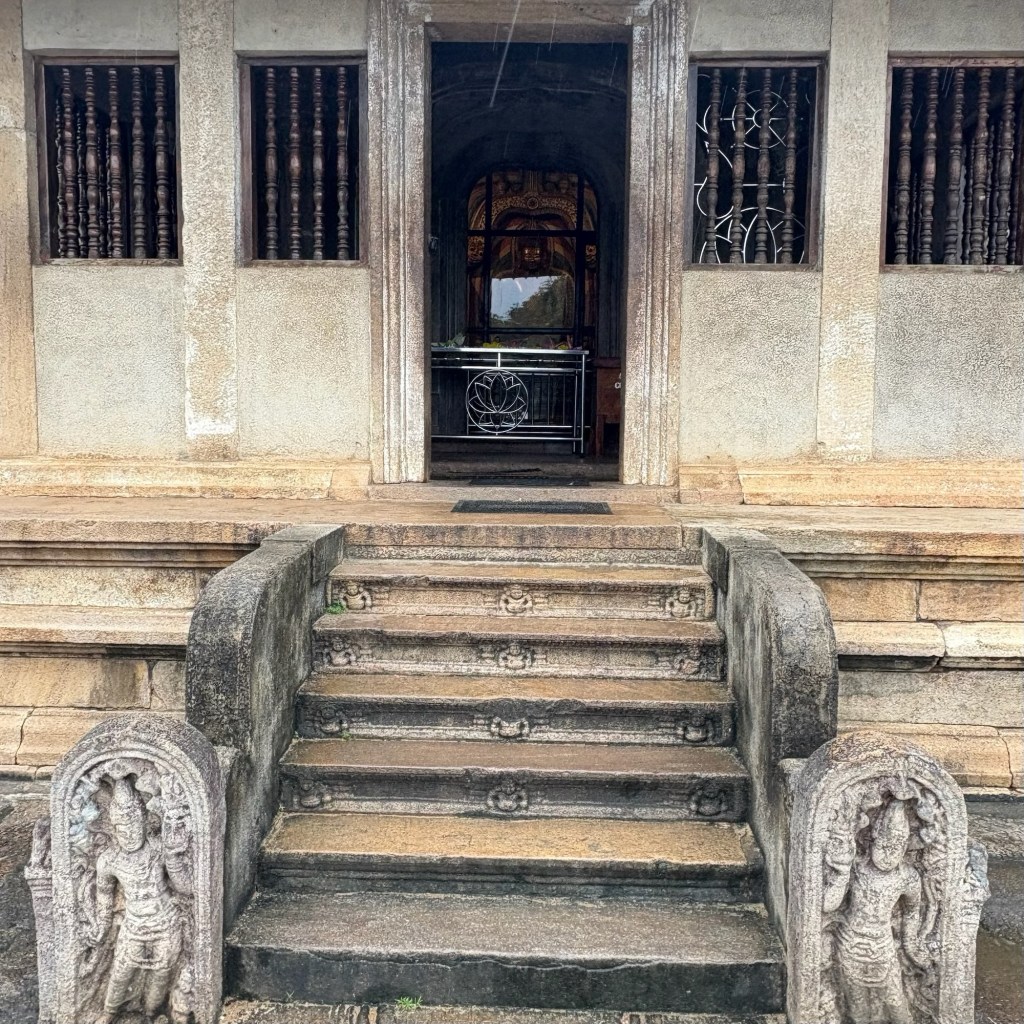
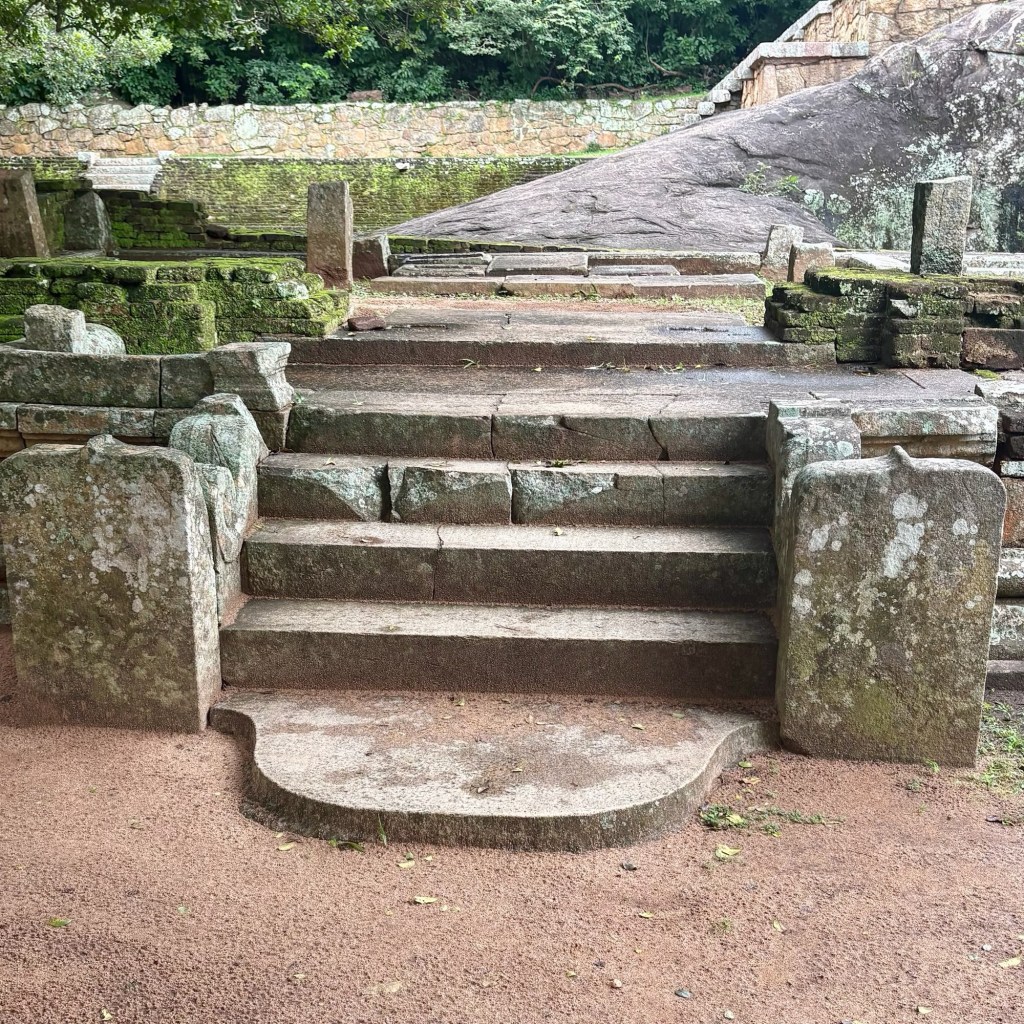
the moonstone ( basically a hearth stone) signifying the four stages of life: Birth, Decay, Disease and Death. These signify the Buddhist path from rebirth to enlightenment. Each band is a stage of the spiritual journey. these are found at the bottom of steps leading into ancient Buddhist temples. The intention is that these are to be viewed as a reminder of your spiritual journey before entering a temple.A detailed guardstone depicting a royal decked out in his finery holding a cornucopia in his left hand and depicting a dwarf in the corner. Dwarves are depicted frequently on the step frontages holding the steps on their shoulders. We are told this relates to returning to this world to hard work for not following the teachings of good in prior life.The steps into the temples had balustrades. Some were very detailed. The guardstones were like carved sentries positioned either side of the first set of steps. These dwarfs represent guardianship against evil and thieves, often as “weight bearers” supporting structures symbolically. Artistically, they may depict a form of dwarfism with features like short limbs, large heads, protruding bellies, and bowed legs, used to illustrate Hindu-Buddhist stories.The first most important Stupa constructed in Anuradhapura which contains the ancient relic of Buddha’s collarbone.The Bodhi TreeBuddhas are portrayed in three different positions, reclining, standing or meditating. They are all quite impressive visually.A visit to the temple always includes an offering. This can include flowers or food to be shared. example of steps, balustrade and guardstones together.
Mihintale
This city lies 16km to the east of Anuradhapura and is considered to have been the birthplace of Buddhism in Sri Lanka
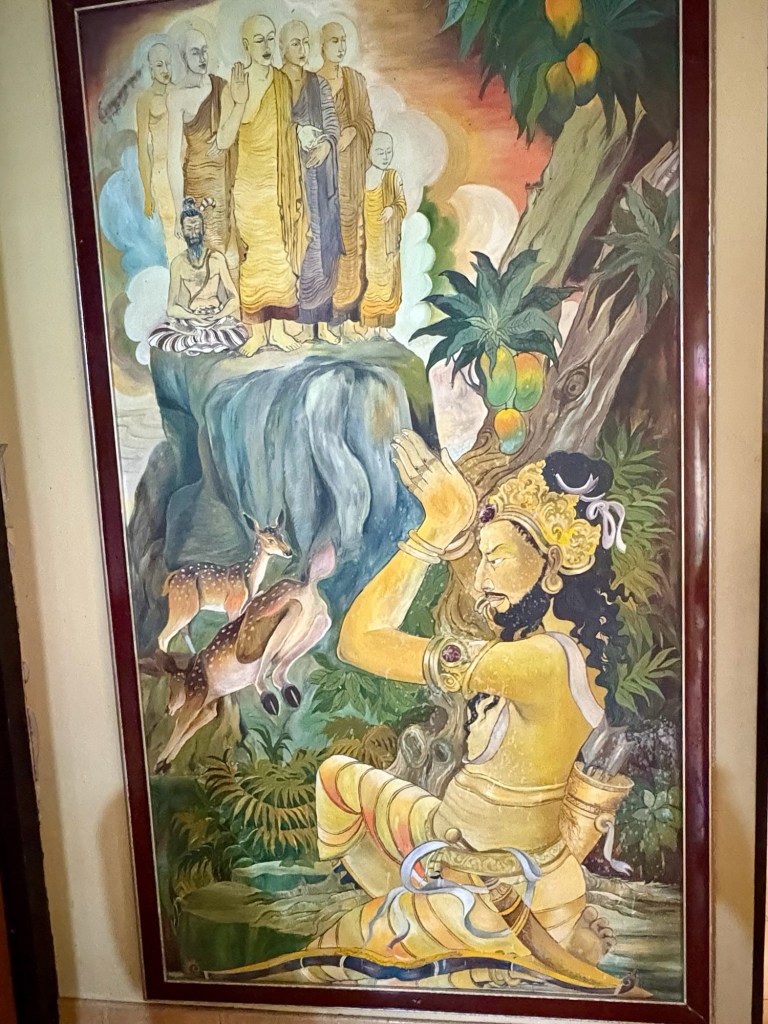
Tissa’s conversion to Buddism. Mahinda is the figure above with raised arm. This was purported to have occurred at Mihintale and was to change Sri Lanka forever.
Mahindra, son of India’s Emperor Ashoka, introduced Theravada Buddhism to Sri Lanka in the mid-3rd century BCE as a missionary. He preached at Mihintale, and converted King Tissa ( who is thought to have been Pandukhabayhas grandson) who then established the monastic order.
Tissa who ruled from 307–267 BCE once converted, sponsored Buddhism as the state religion. This fostered ties with India, importing technologies like advanced irrigation systems comprising tens of thousands of enormous man made lakes, large-scale architecture for stupas and monasteries, and methods in medicine and agriculture, boosting productivity and civilization.
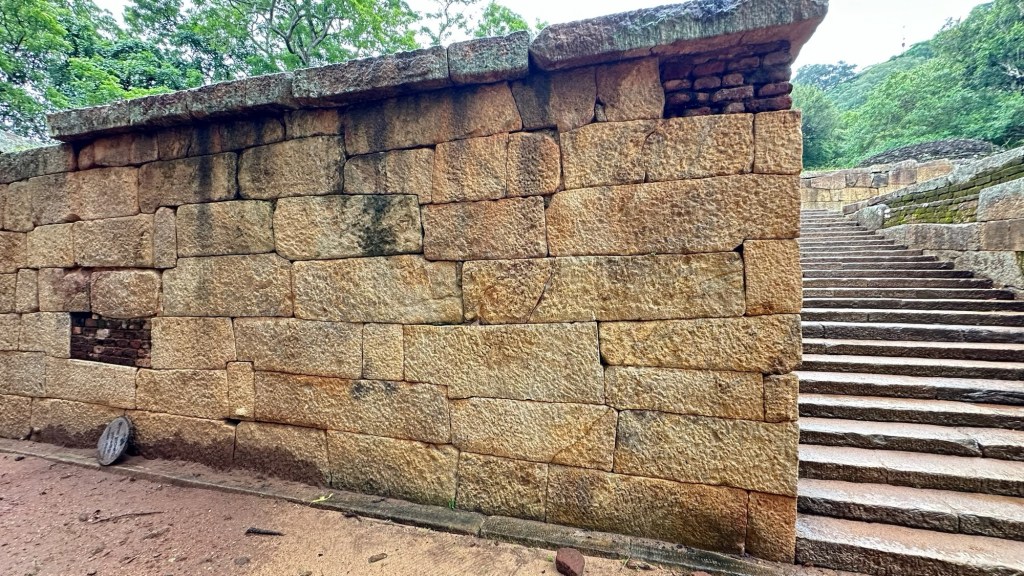
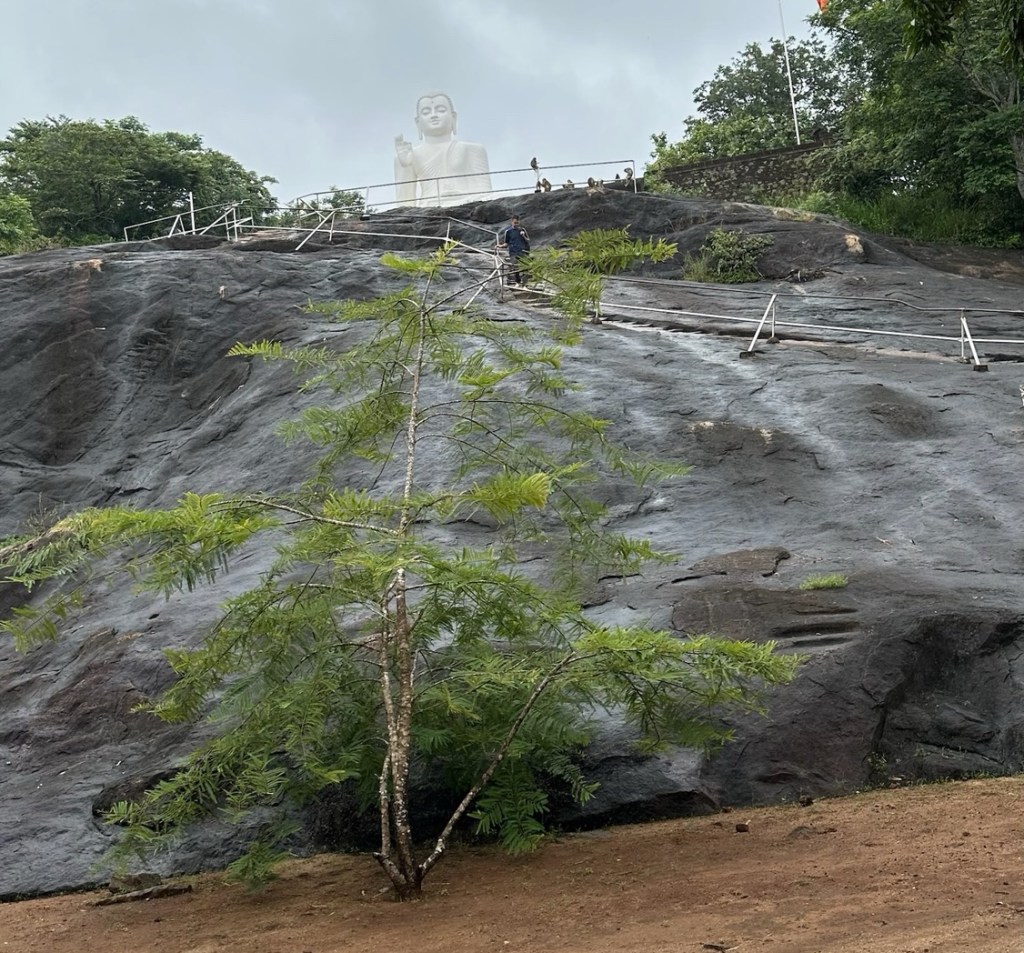
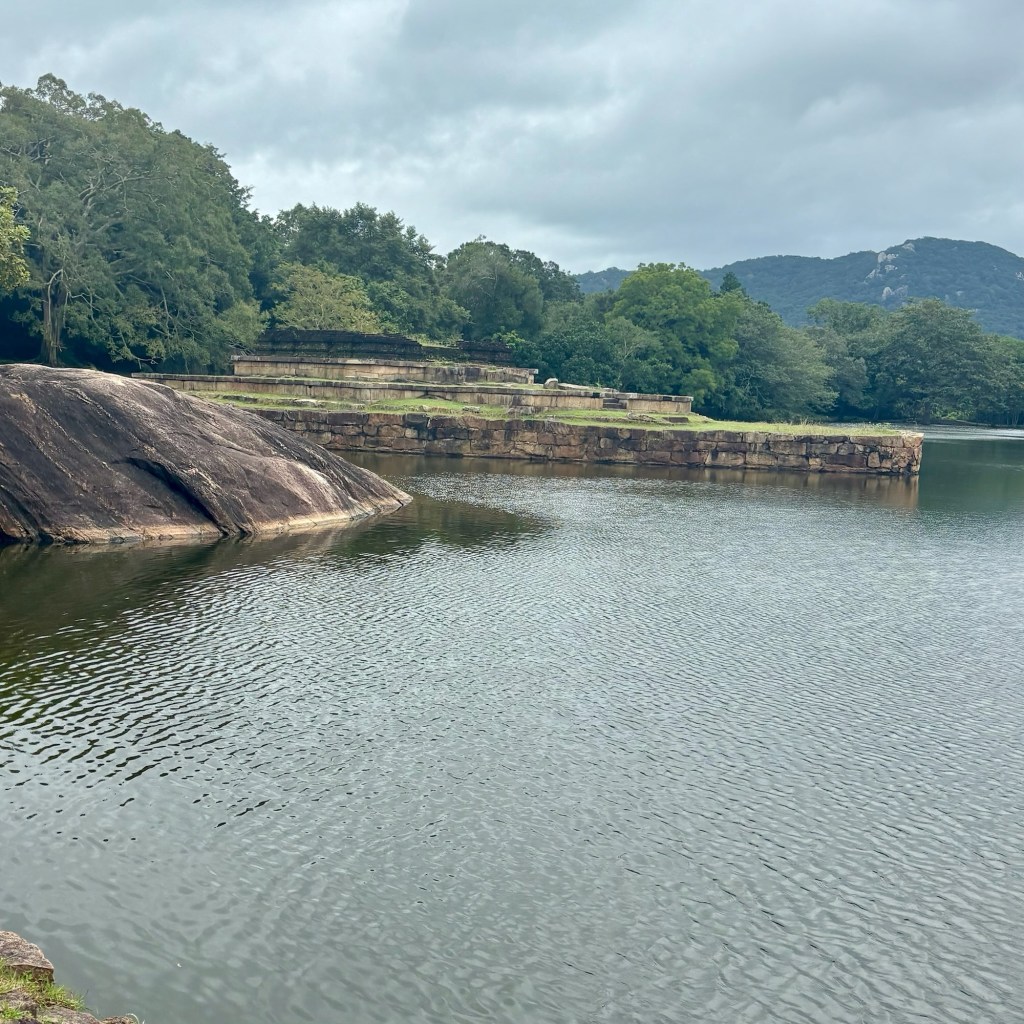
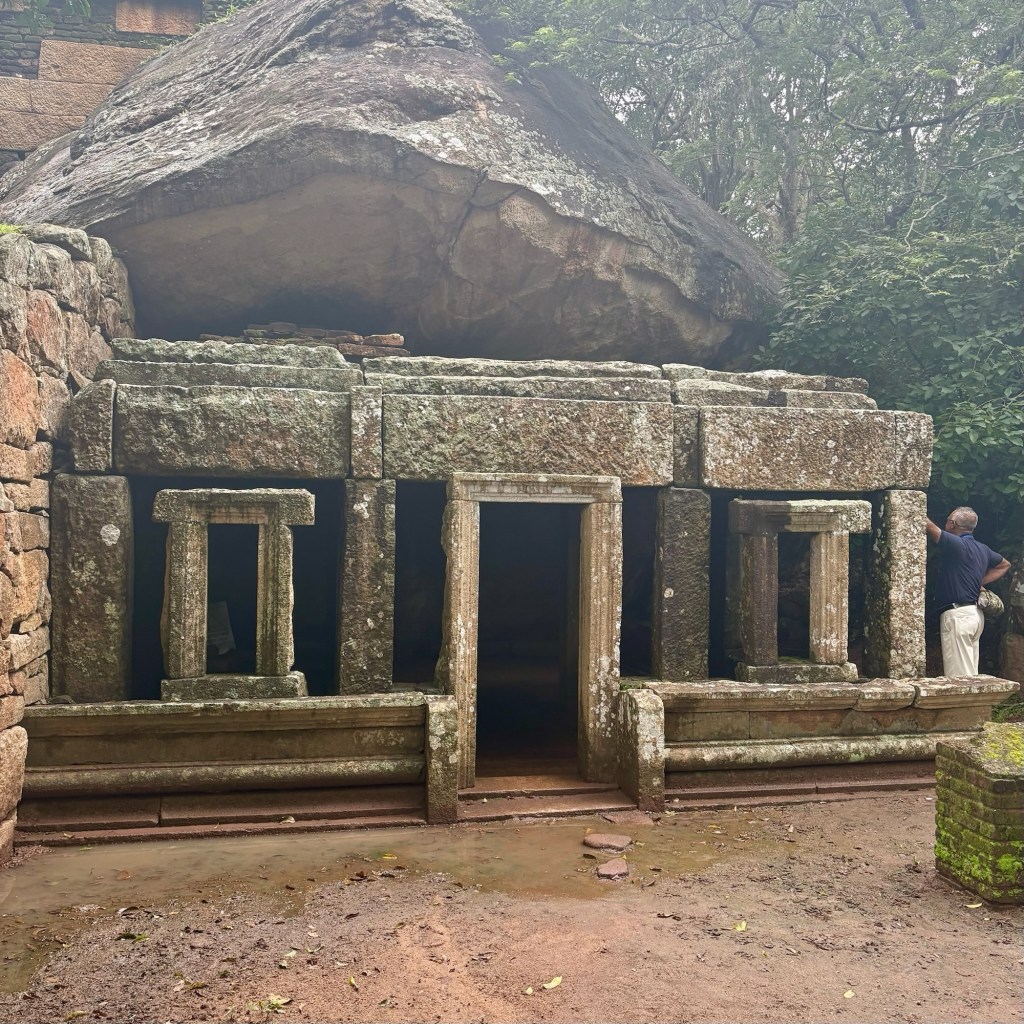
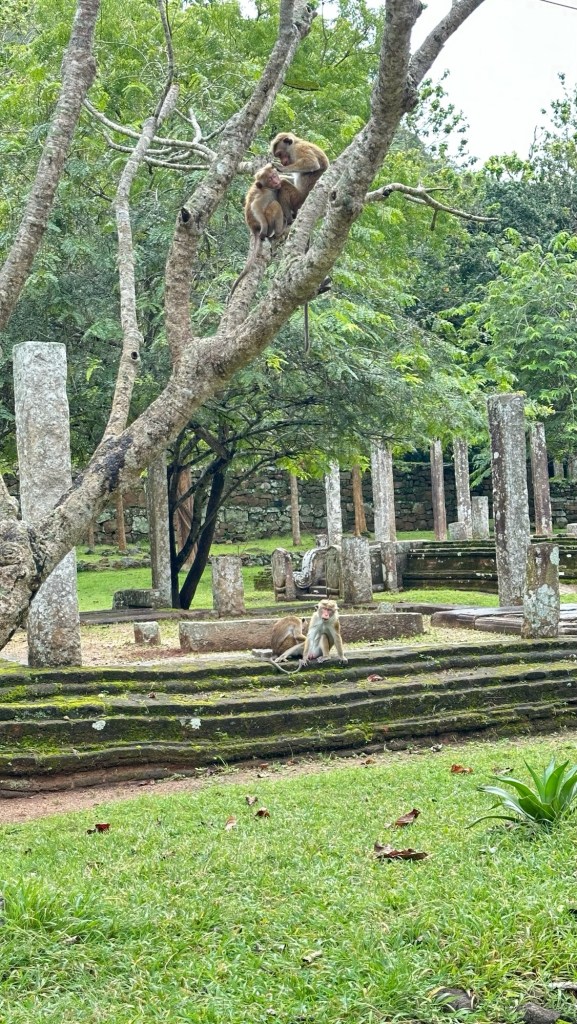
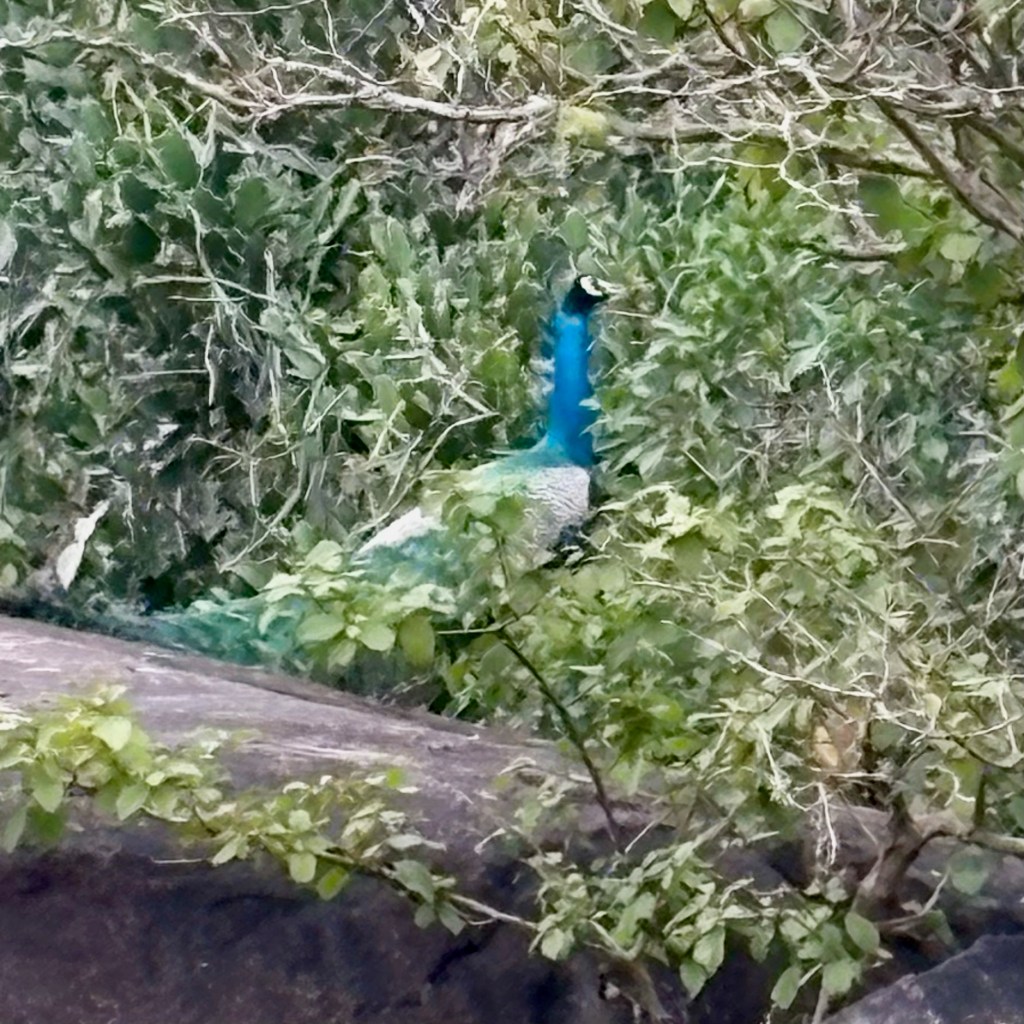
Note the precisely cut stones. This would be difficult if not impossible with a hammer and chisel. Did they have other methods of cutting stone that are now lost skills?Buddha on top of the rock where the king was first converted and accepted the invitation to become a Buddhist Looked a bit treacherous in the rain so we declined to climb. all entry to temple sites requires the removal of shoes regardless of the terrain, distance to be covered and weather.Neither of us has ever had such wet and dirty feet as required by this adventure but it was not in vain.The Dark PondVery early moonstone and guard stones at the Dark Pond. It’s not known how old this complex is or who built it but the lack of embellishment and decorative carvings suggests they are some of the oldest. Ancient structure at the Dark Pond. The stone work is remarkable considering it goes back to 300BC. Stone framed windows.Monkeys monkeys everywhere. They are part of the landscape, the history and provide endless moments of smiles and entertainment. Have to be careful though!The refectory ( alms house) for the feeding of the Buddhist monks of a monastery. This was an important building. Estimates of how many monks occupied a site were determined by the size of the rice trough in the refectory. This was a structure created to be filled by rice brought by the locals for the sustenance of the monks. There is clear evidence at these sites that the process of service very much followed current mass catering cafeterias with rails and posts erected to direct the flow of traffic. a separate smaller trough would contain a curry mixture.It materialises that health provision within a monastic site was well catered for. The “hospitals’ consisted of an entrance into a central open courtyard. Separate small treatment rooms were created around the edges of the courtyard. Each hospital contained a deep stone bath crafted with a slant to ensure the head was not submerged. This was filled with herbs and water to allow for the treatment of ailments and skin conditions.peacocks – all over Sri Lanka




 Phil and Carolynn's travel adventures