The “Heroic” city of Nousa in about 15 miles north of Veria where we have based ourselves on our two week roadtrip. It is situated in Central Macedonia about 60 miles south west of Thessaloniki, Greece’s second city. The area through which we drove is in the upper levels of the massive fertile Macedonian plain. Following a low contour at the base of the foothills gives a clear outlook across this vast, intensively farmed area. All manner of orchards, crops and vegetables grow in abundance.
There are a few reasons why Macedonia was so wealthy in ancient times and none was more important that agriculture. It also had substantial gold reserves. The manner in which the plain is ringed by mountain ranges means that water is abundant. The canals and watercourses have been developed over many centuries, some areas doubtlessly going back to hundreds of years before the birth of Christ.
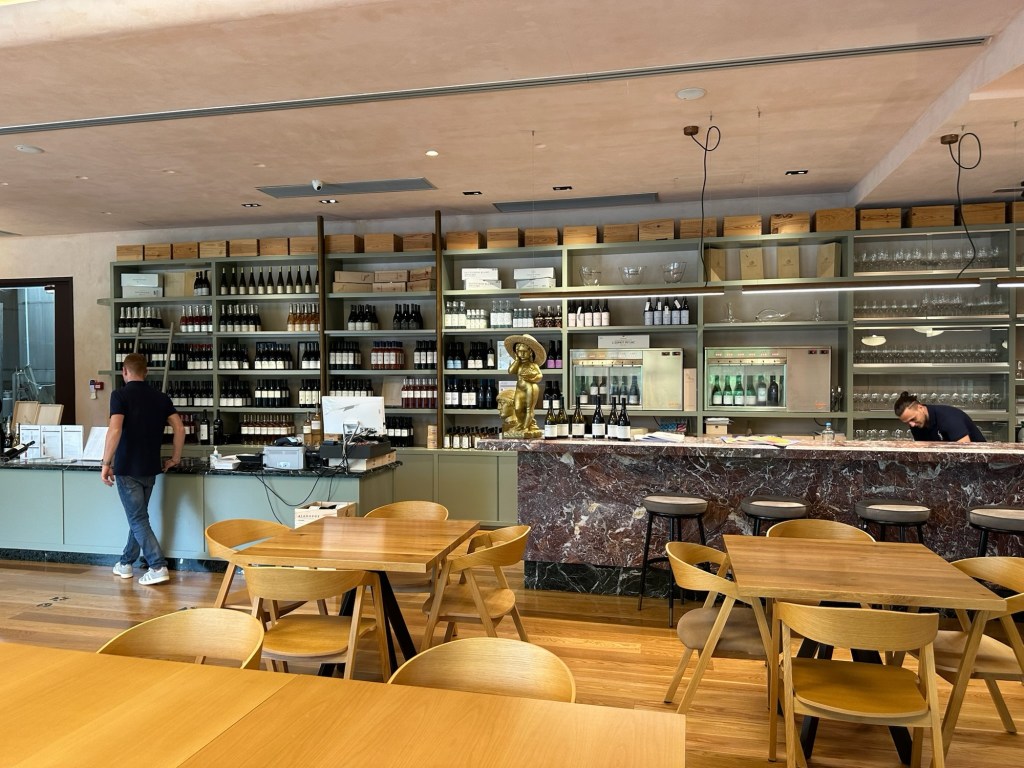
As you climb up towards Nousa the vineyards are everywhere! There are at least five well known wineries that offer tastings. We visited Kir Yianni and were very impressed. There is good Greek wine beyond the infamous retsina! I believe I heard that the 15 hectares required a full time crew of 80 staff which was added to by some seasonal workers at harvest time.


Nousa has a fast flowing, powerful river that flows through the middle of the town. As the geology is mostly limestone, rivers tend to cut deep valleys, much deeper that other places we have travelled where the rock is of igneous formation and therefore much harder.
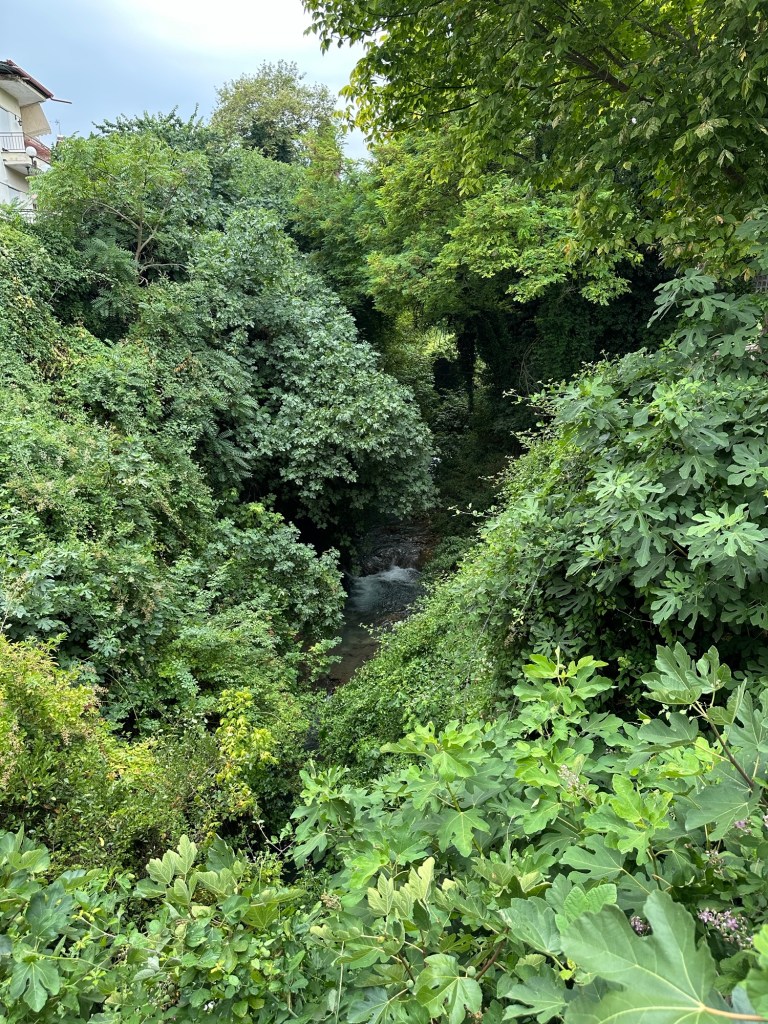
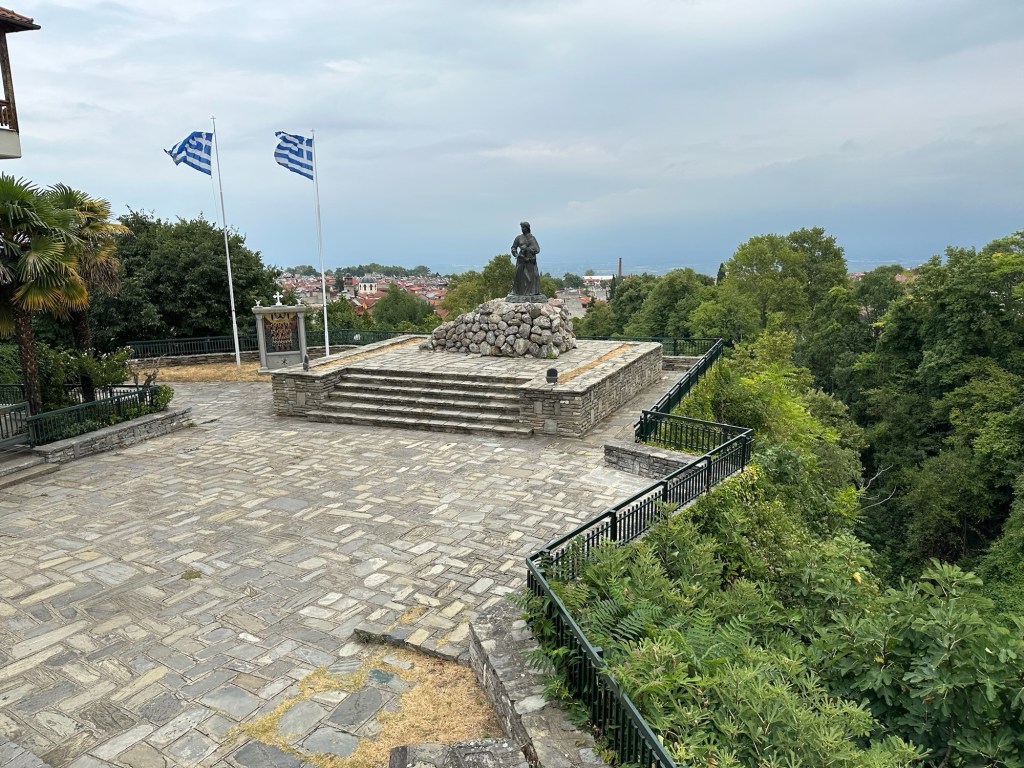
The place where the gorge is deepest in Nousa was the site of a tragic yet heroic event back in 1820 when a large number of women and children took their lives by jumping into the gorge rather than being taken captive by the Ottomans. Death was preferable to slavery hence the title the “heroic city of Nousa.”

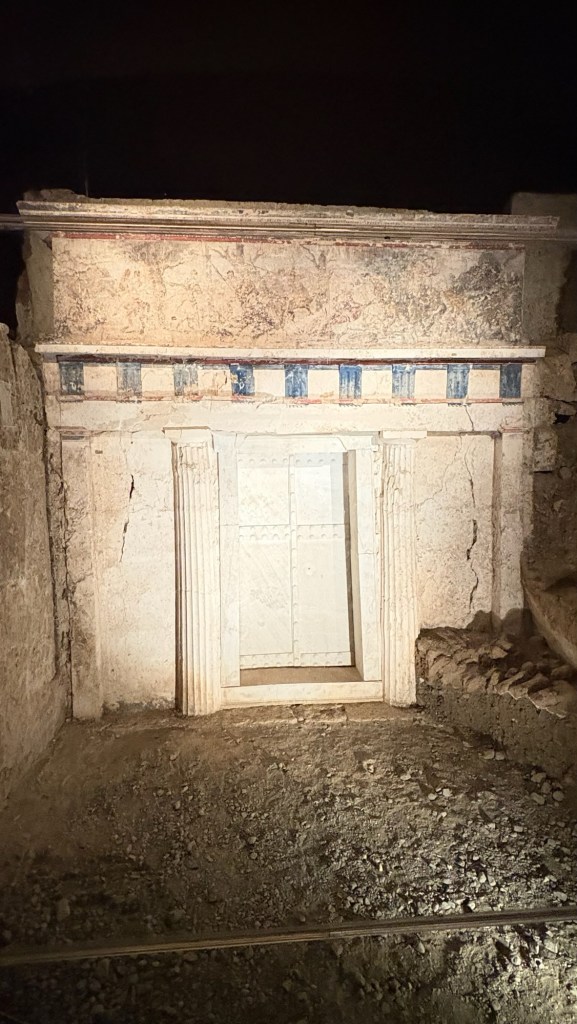
The Royal Tombs at Vergina- a must see destination
Vergina is a small town situated about 10km south east of Veria and approximately 75 km south west of Thessaloniki. In the early 1970s extensive excavations were carried out at Vergina. It was presumed for some time that the 1st ancient Macedonian capital of Aigai was situated nearby. The Greek archeologist from the University of Thessoloniki had good reason to believe that he would find the tombs given the journals of earlier explorers. One French expedition from 1850 reported excavations at the site to Napoleon the 3rd but they were subsequently abandoned.
There was plenty of evidence of materials having been scavenged from the existing excavations in the early 1920’s when Greek refugees returning to the area settled and built the new town they called Vergina.
However in 1970 Andronikis the archaeologist completed the excavations of the Palace of Aigai and then determined to investigate the huge tumulus area which he suspected of being a burial mound. Although one of the tombs belonging to the queen, Here he uncovered 4 buried tombs two of which had never been discovered and disturbed! The tombs belonged to
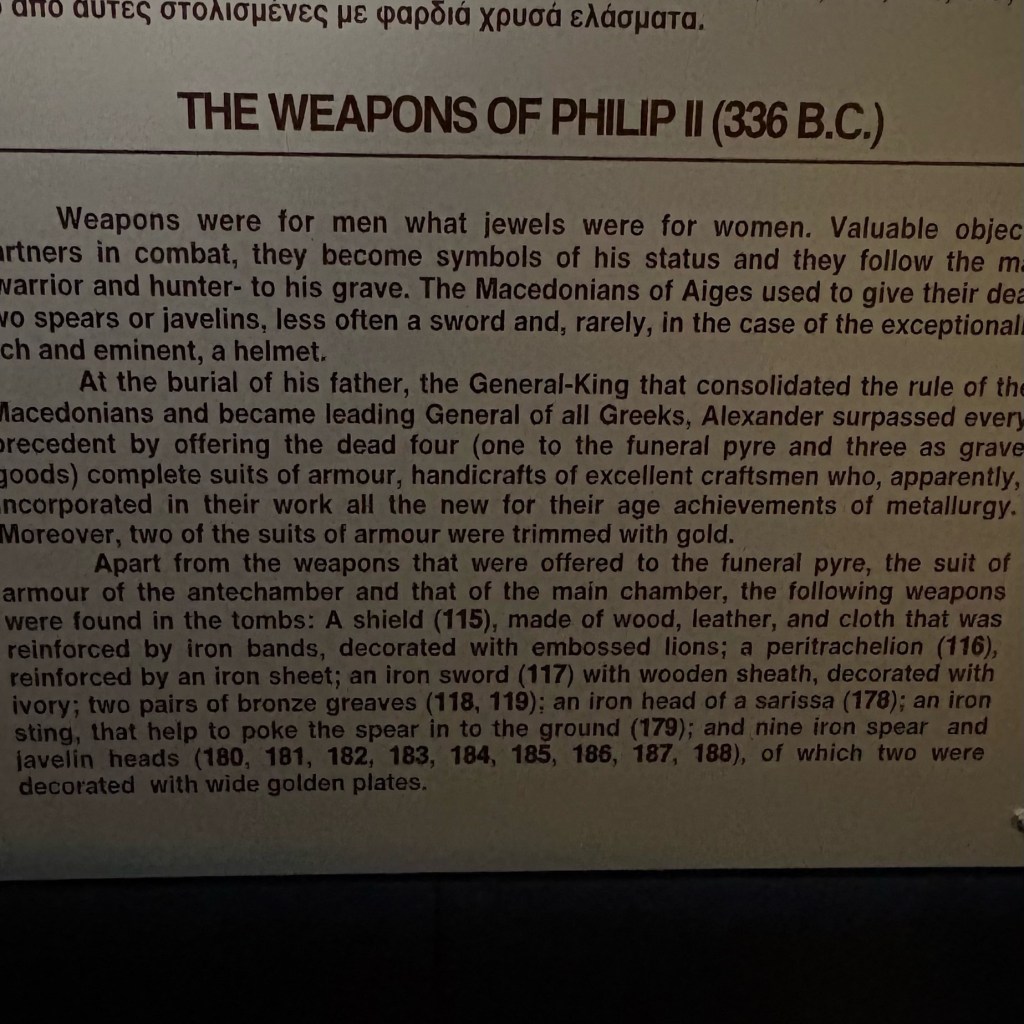
Phillip the 2nd (Alexander the Great’s father)- undisturbed
Phillip the 2nd of Macedon (Alexander the Great’s half-brother)
Alexander the 4th of Macedon (Alexander the Great’s son) – undisturbed
Cleopatra Eurydice and child – Phillip the 2nds wife.
As the tombs were effectively airtight the condition of anything metal was truly remarkable. Nothing dented. No ceramic cracked. Much of it looked like it was as fresh as though it had been recently crafted.
These tombs are over 2500 years old and it takes your breath away to look at something of such historial significance that remains in situ after such a long period of not only time but also upheaval and occupation and to see them as they were constructed. The era of the Romans and the Ottoman Empire occupied this part of the world and still they remainedd hidden. A truly magnificent archaeological find.

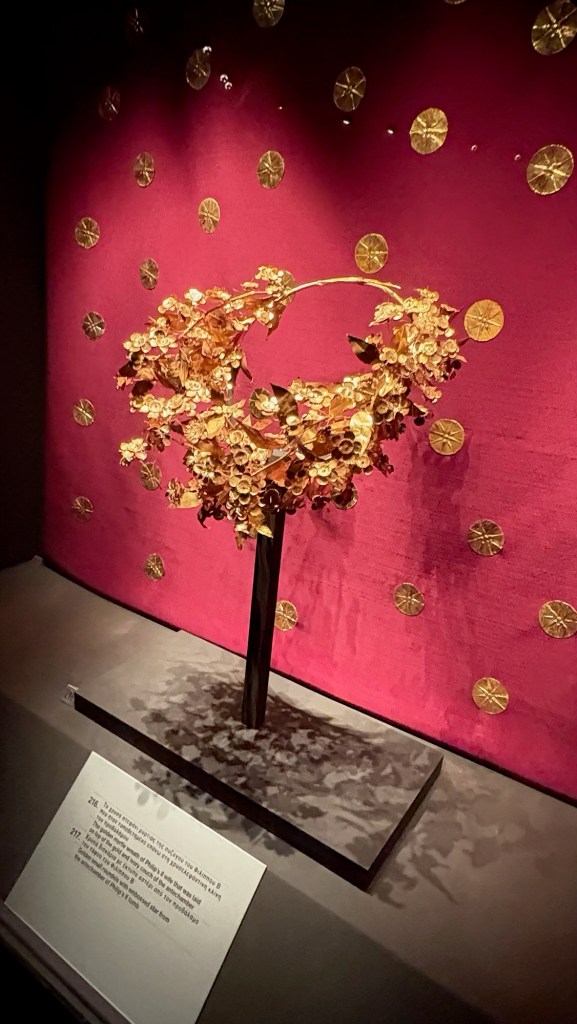
What really takes your breath away is the gold. There is so much of it. The burial boxes which held the cremated bones weigh over seven kilos each. The crowns of gold are so intricately woven with such fine golden wire that our guide suggested that the tools and techniques to create this are not known today.





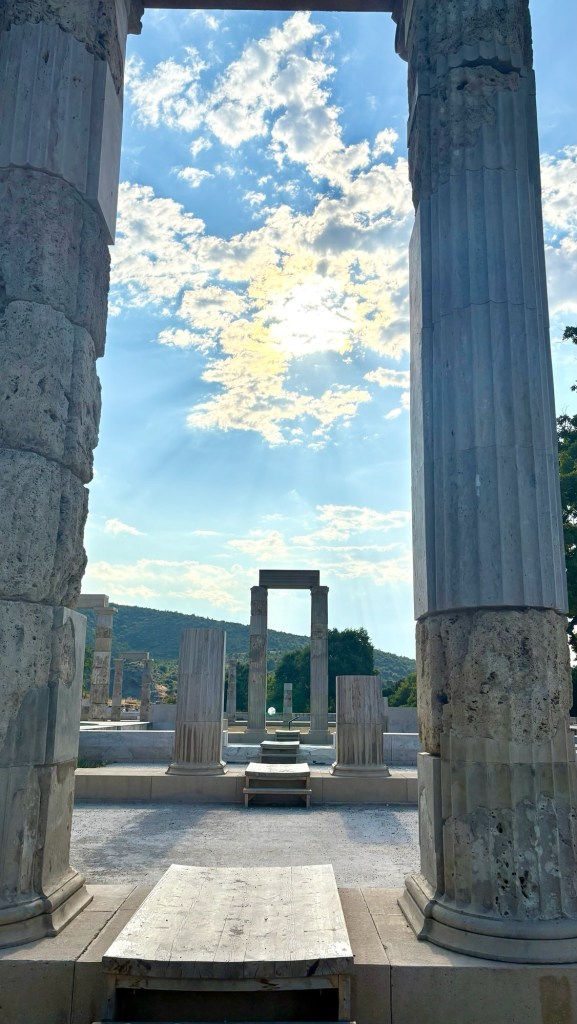
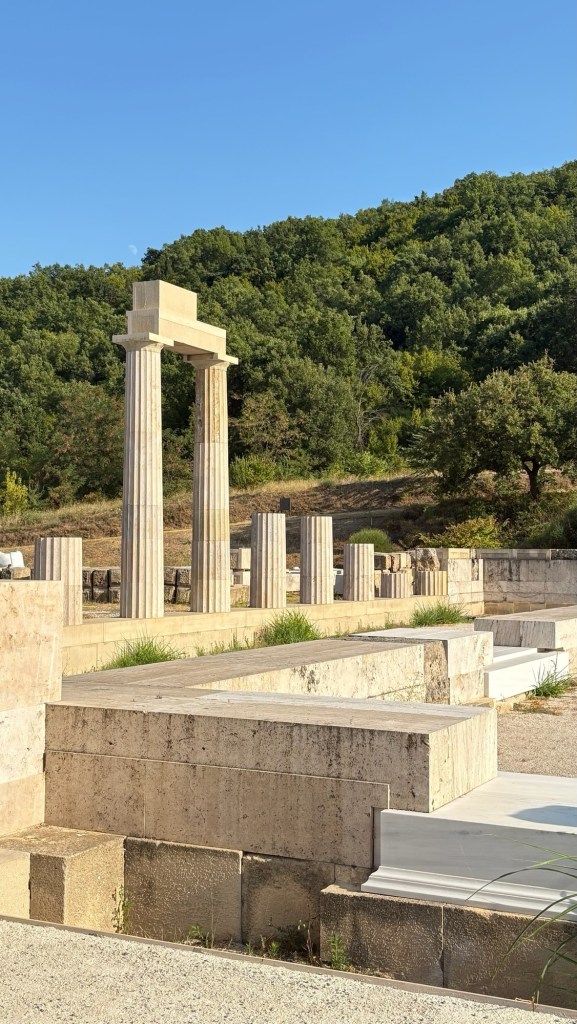
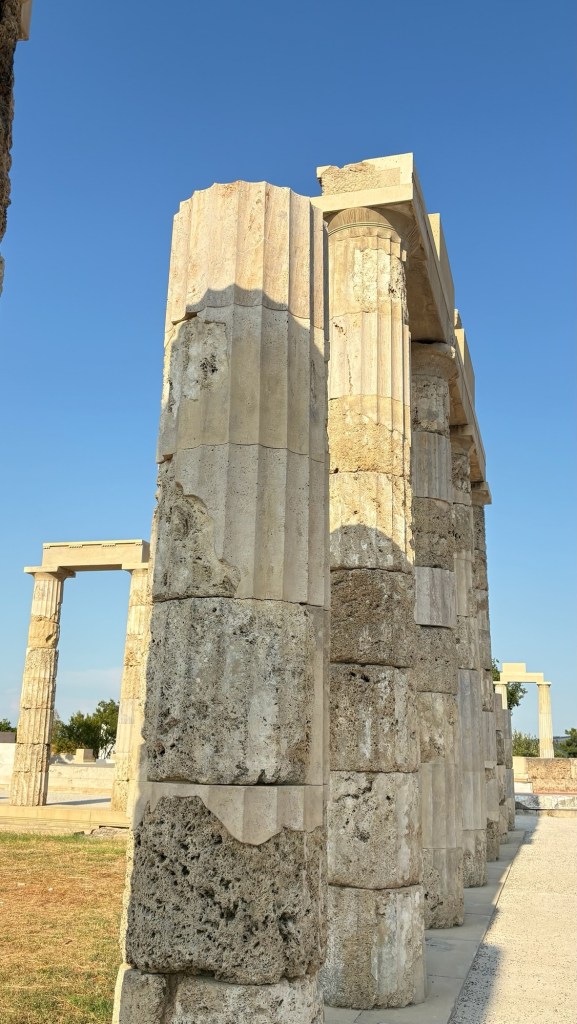
The Palace of Aigai (at Vergina)
The Palace, built by Phillip the 2nd ( 359BC – 336BC) at Aigia is also worth a visit. It is a 1km walk up a gentle hill from the car park in the town of Vergina and there is no charge to enter. In its hey day, it was a huge symbol of power and beauty, larger than the Parthenon, at 15000sq.m.
It is the place that Phillip was assasinated and Alexander the Great crowned King in 336BC



A truly informative day…..
now for the wine.
 Phil and Carolynn's travel adventures
Leave a comment