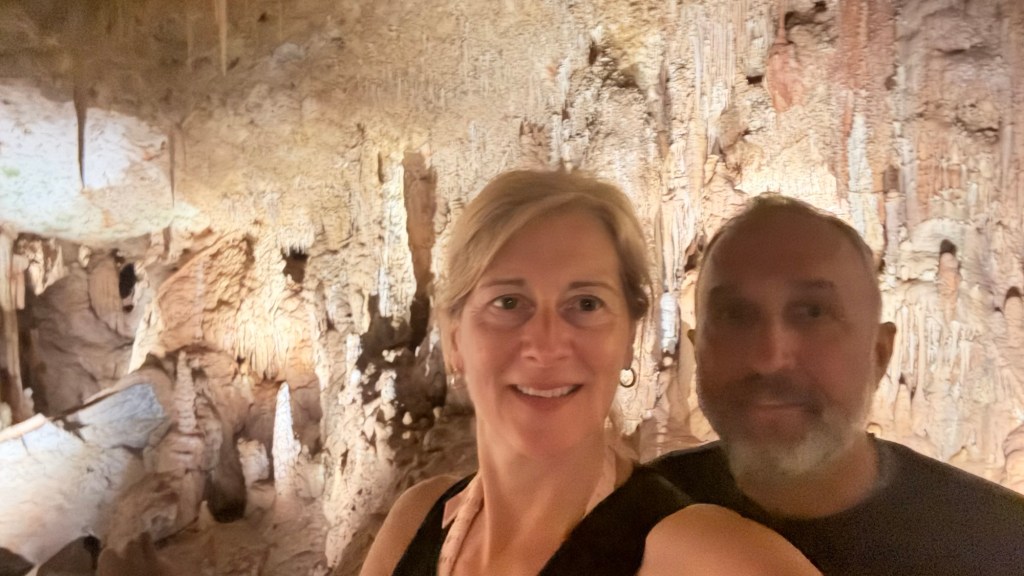
Inland a short distance from our coastal retreat the agriculturally rich fertile plain rises up to a low mountain range that includes Mt Katsika. The drive to Petralona was about 15 miles through a small holding agricultural landscape of quiet villages but miles of olive trees, grapes, peppers and melons. Otherwise unremarkable, it is home to a cave that was discovered in 1959 by a shepherd seeking a local spring water source.
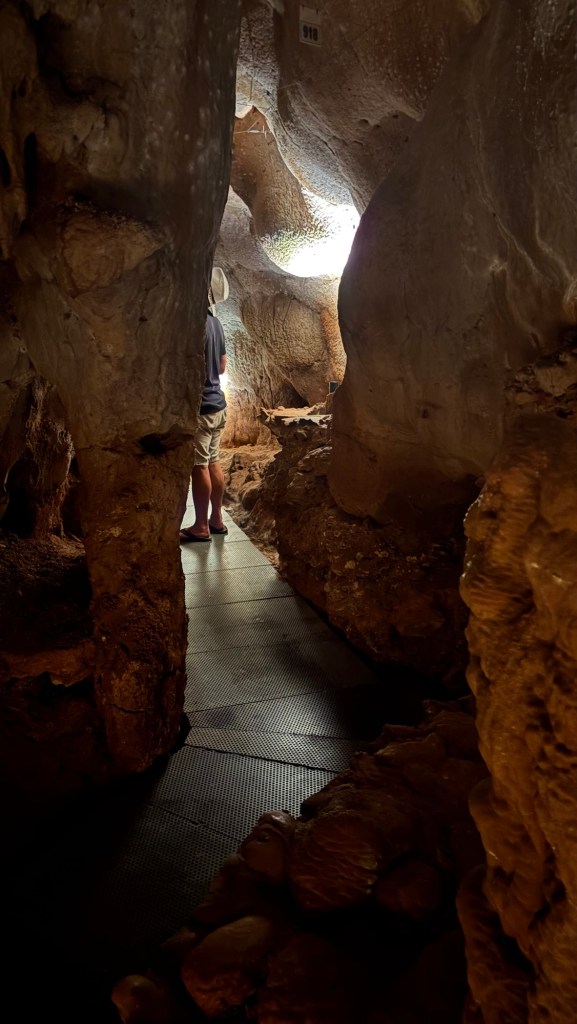
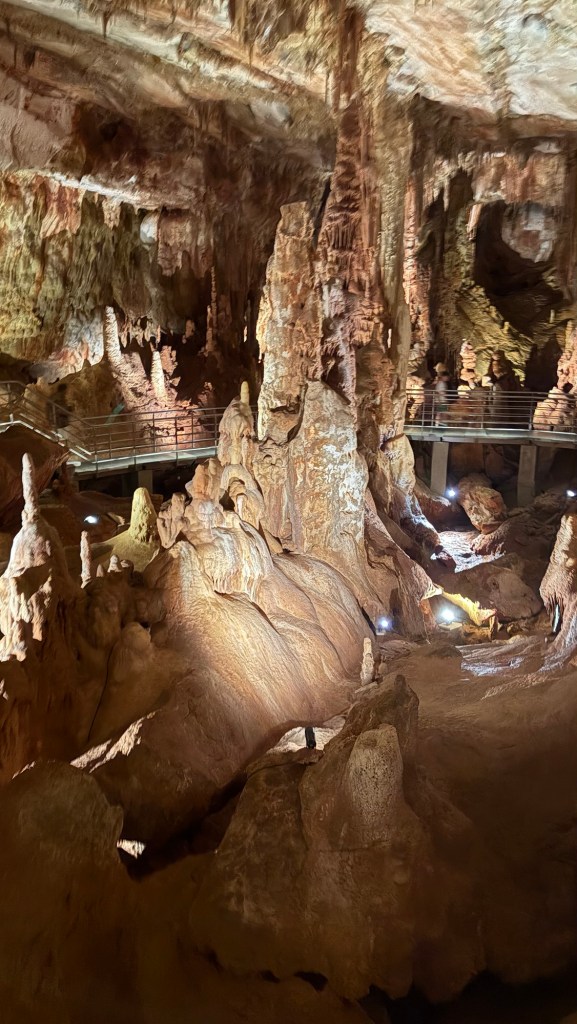
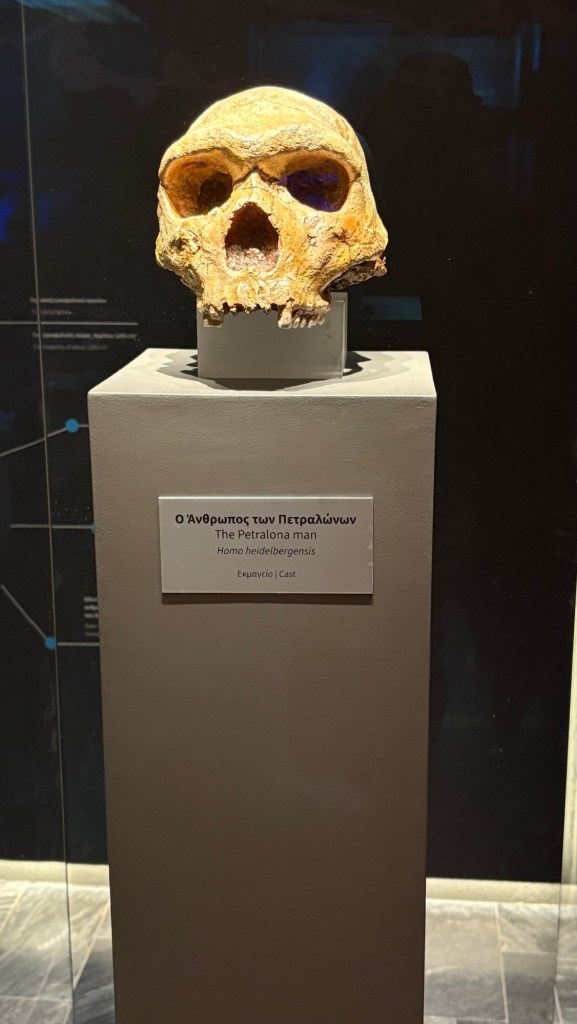
It covers an area of approximately 10,000m and is part of a huge cavern system that has found its place in history as as being one of Europe’s most impressive caves. Its size and the age and extent of the variety of its fossils along with its examples of stalagmites and stalactites have provided an insight into prehistoric life and existence in mainland Europe. In particular a skull recovered from the chamber is considered to be an ancestor of Neanderthal man and has been dated back 250,000 to 300,000 years. It is considered to be one of the earliest and best preserved human findings in Europe.
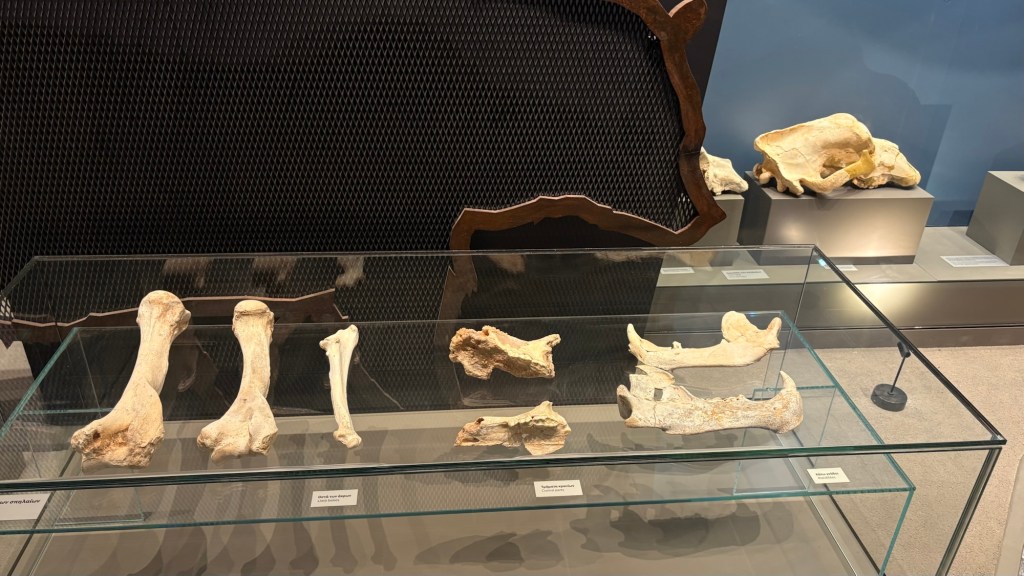
The cave is fascinating and the museum next door is new (August 2024) . It is a wonderful airy facility that has been well thought through and provides plenty of information and timeline guides. Its cost is covered in the price for acces to the cave and I thought it was disappointing that most of the people on our cave tour did not take the opprtunity to learn more about what they had seen and how the secrets revealed by the cave directly contributed to our own presence and development on this planet.
https://en.wikipedia.org>wiki>Petrolona_cave




 Phil and Carolynn's travel adventures
Leave a comment