This was a big driving day. We left Eagle Point campground near Moose Pass in solid rain that was to last not just the entire day, but also for several days into the future. We had to stop at Go North, the RV hire company, on our way through Anchorage to get assistance with a water leak. After that we did a “provision heavy’ stop at Fred Meyer, the local branding for Kroeger, before we headed north.

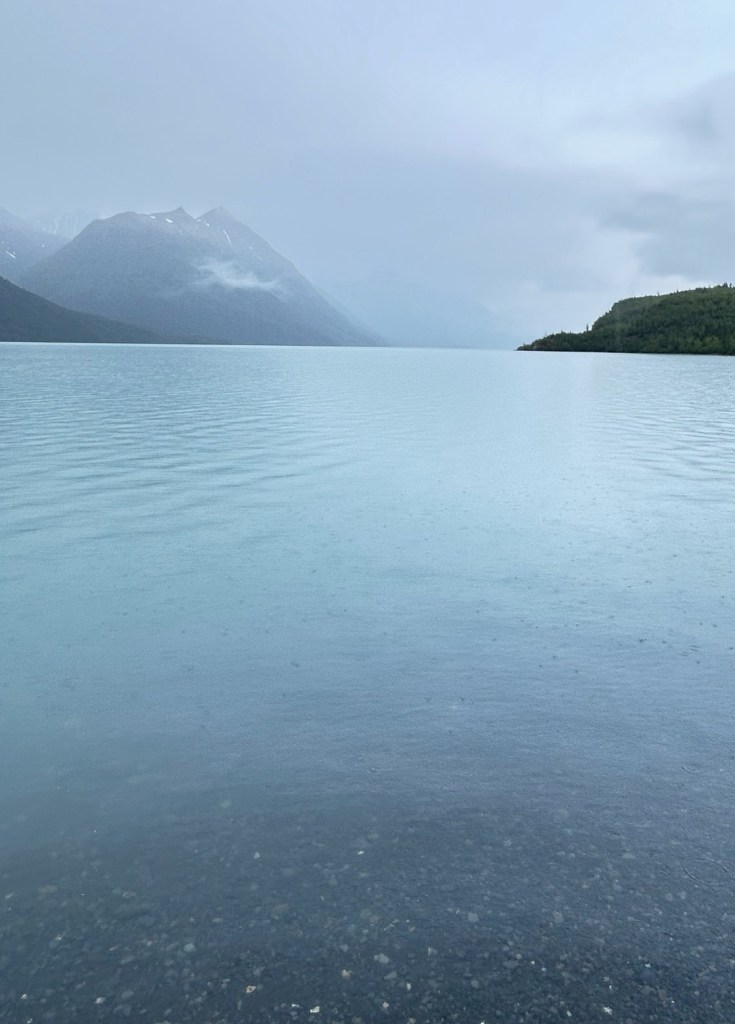
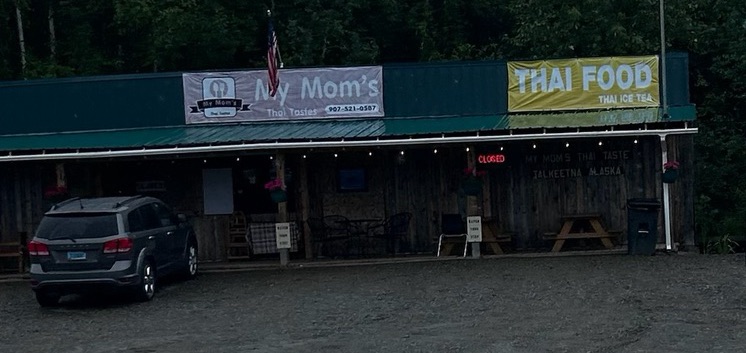
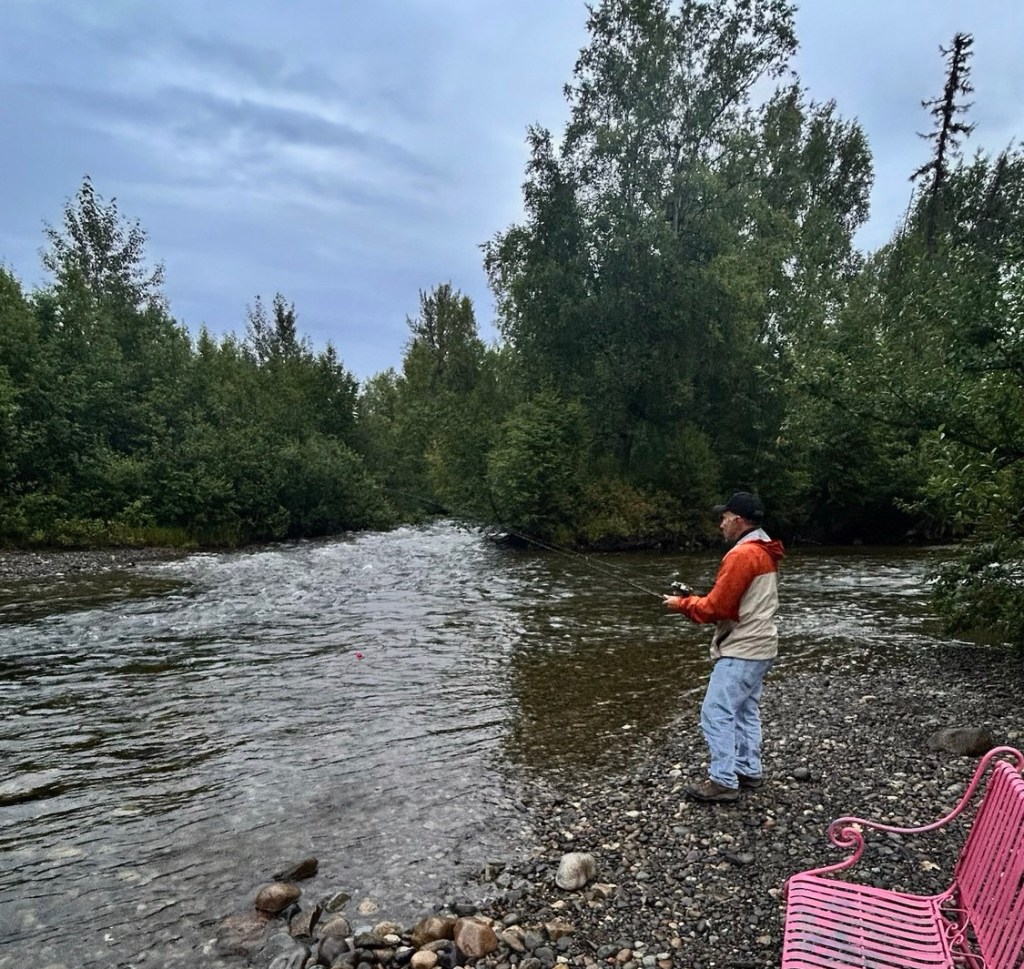
We’d been on this first part of this route from Anchorage to Wasilla the week before when we visited Elicia and Ernie on our first day in the RV but once we reached Houston it was a new and totally different Alaska. For 70 miles we looked for somewhere to eat and there was _nothing_ remotely worth stopping for until we chanced upon the excellent ‘Mom’s Thai’ at the junction of the highway and the Talkeetna Spur road. This place must be quite new as it did not feature in the Milepost guidebook which has become our Alaska travel bible. After filling our bellies with affordable and very tasty curry we turned back towards the Montana Creek campground where we pitched up for the night. Noteworthy was the fishing and new highway bridge.
Talkeetna – Busy and a fascinating history
The amount of activity at Talkeetna was surprising to me but given the significance of this place it shouldn’t have been. This is the last major town on the route to Fairbanks where the rivers run south from the Alaska Range to the northern Pacific. Not much further north of Talkeetna you reach a point where the rivers run north from the glaciers into the Yukon where the distance to the Bering Sea is over 1,000 miles. The significance of this is that salmon run into the area around Talkeetna in abundance but not much further north where the distances are too far from the sea.
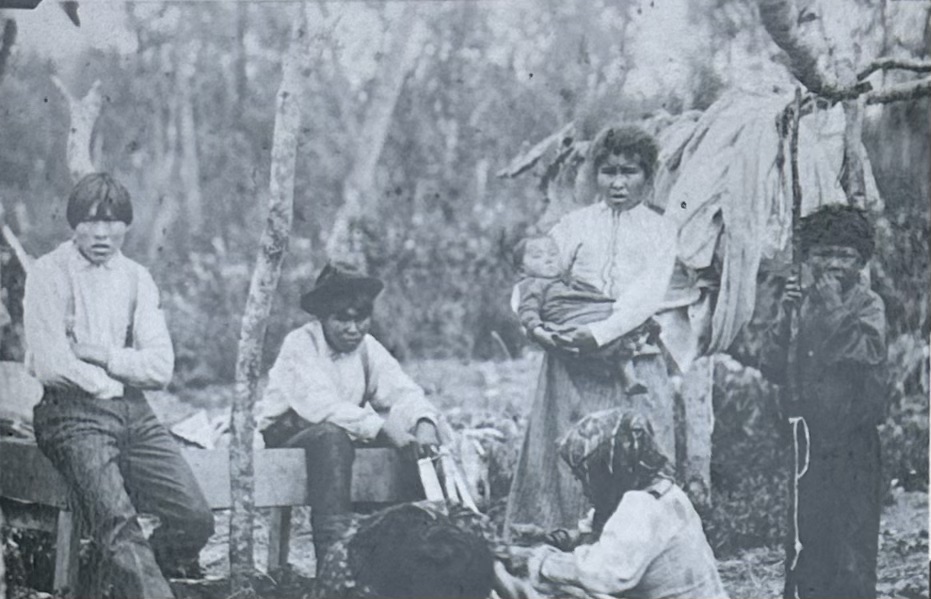
The first inhabitants of this river rich area were the Dena’ina Indians who came to the area seasonally to fish and store their catch. The fish were first dried and then stored in dug out cache pits. Talkeetna means ‘Food in stored river’ or more poetically ‘River of Plenty’.
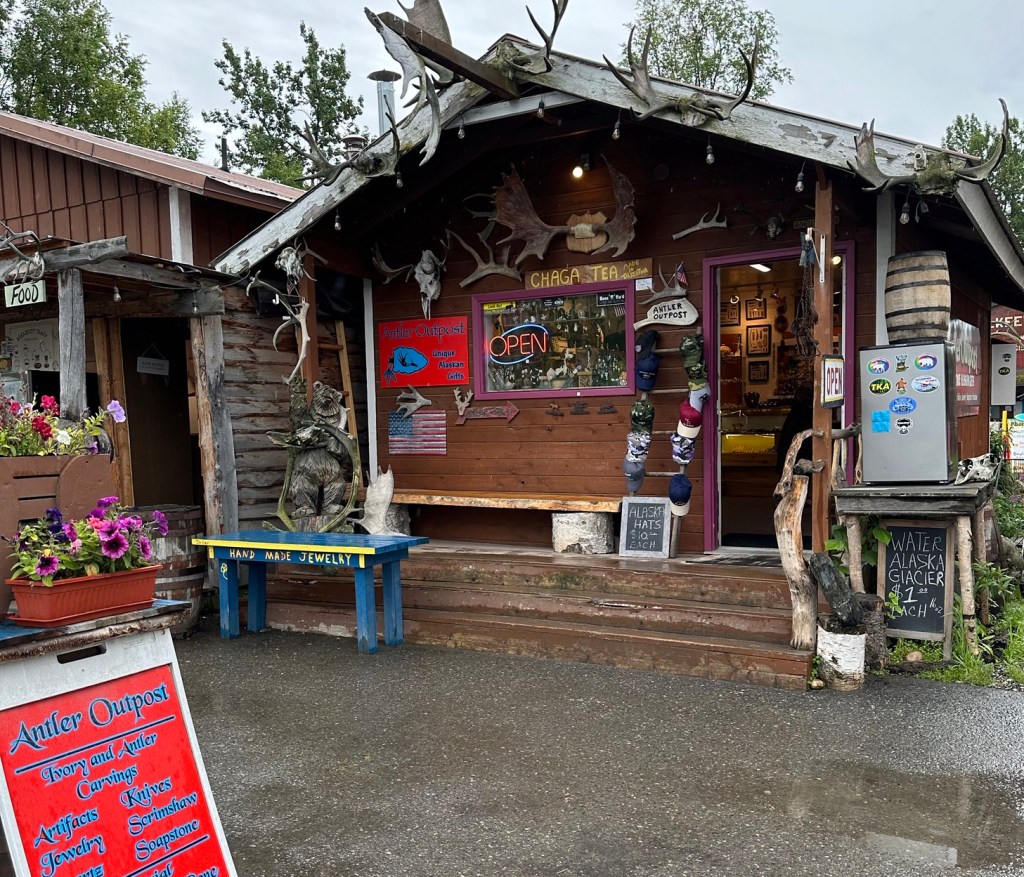


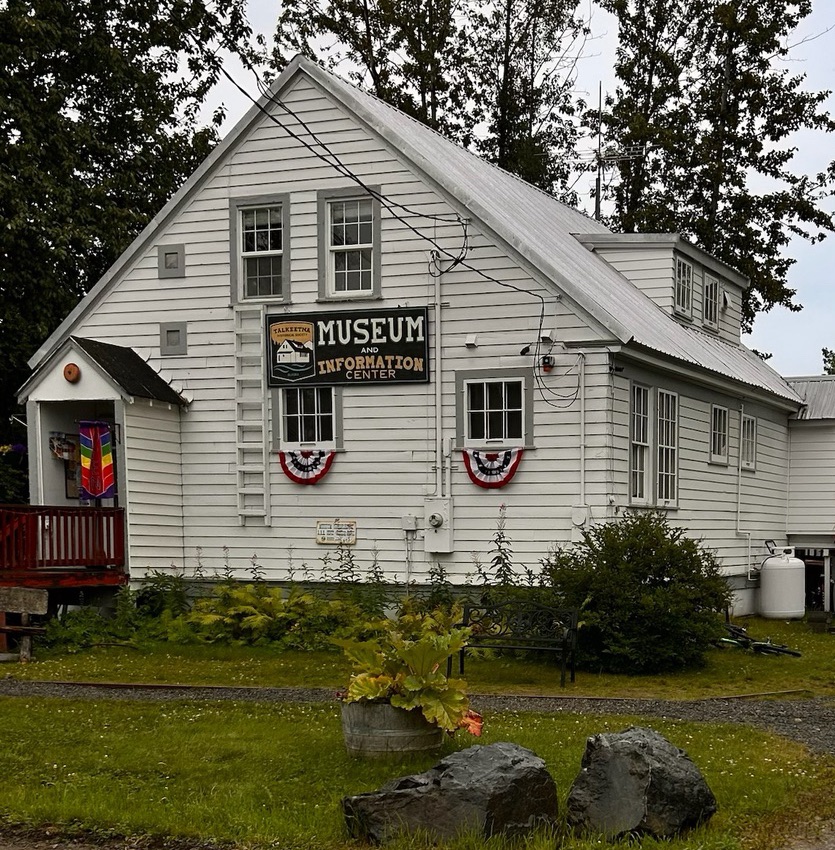
The town has a current population of 1000 people but it has managed incredibly well to retain its old town charm and architecture. It has no less than 19 historic buildings that can all be viewed easily by walking tour without the need to have to cover too much distance. The downtown was placed on the National Register of Historic Places in 1993 and is well worth the 14 mile detour from the main north/south highway when travelling between Anchorage and Denali.

I was particularly intrigued by this 1902 reconnaissance map. Alfred Brooks (Wikipedia) landed on the 5th of June at the mouth of the Sushitna River near present day Wasilla. The range of mountains he traversed through June, July and August are of the harshest terrain anywhere in the Americas emerging at Rampart on the Yukon on 15th of Sept. I’m keen to learn more about this incredible journey which covered such a vast treacherous route. The references in Wikipedia are sadly rather sparse.
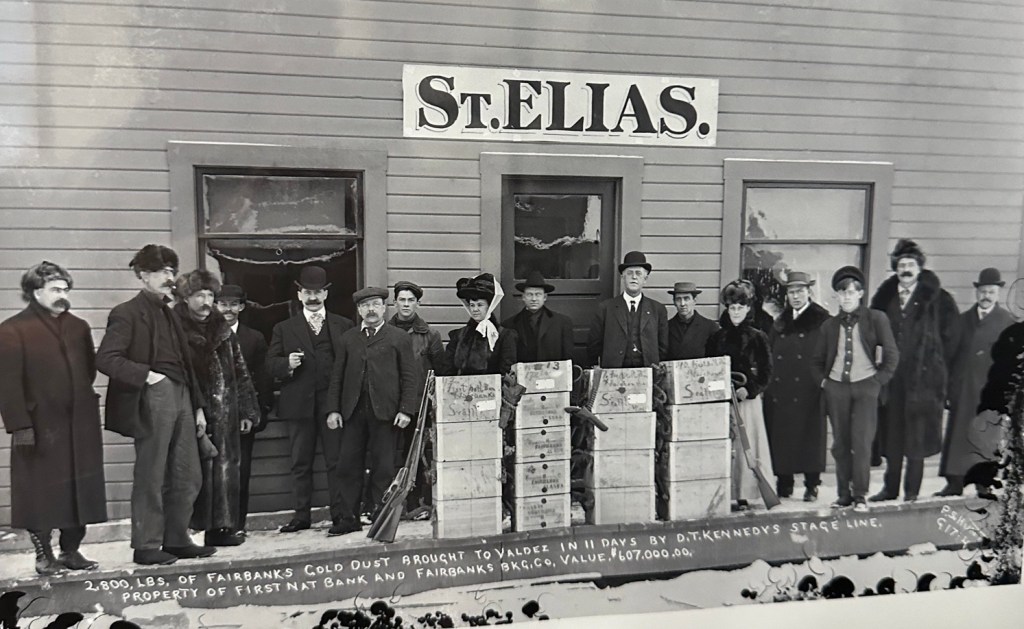
In 1905 gold was discovered in the Yenta Cache Creek roughly 50 miles north of Talkeetna. Though the Alaska Commercial Company had been operating a trading post here prior, the town grew explosively after this point.
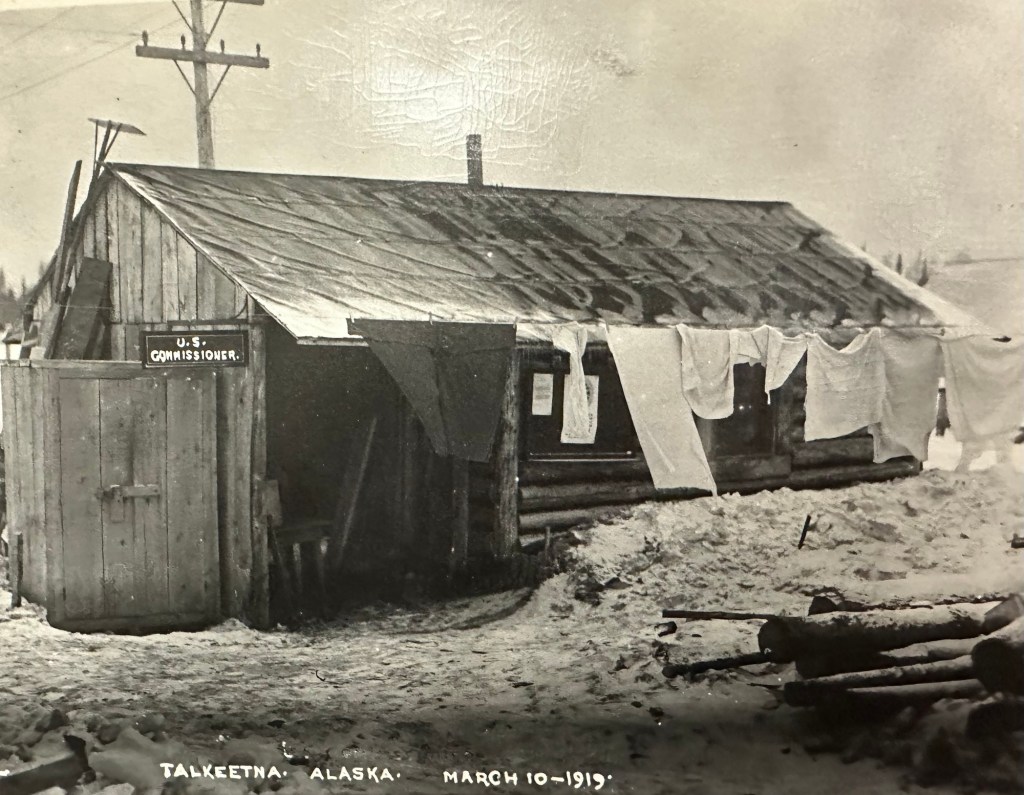
In 1915 President Woodrow Wilson named Talkeetna as the district headquarters for the railway to connect Seward and Fairbanks. As with most towns in the Alaska interior it was nothing more than a vast tent city boasting several general stores, restaurants, a bunk house and sawmill. The post office opened in 1919 and that year 40 acre plots were auctioned off for an average price of $14.25 each.


It’s not possible to overstate the difficulty and importance of the building of the Alaska Railroad. The only other project ever undertaken by the US Government of this scale and complexity is the Panama Canal.


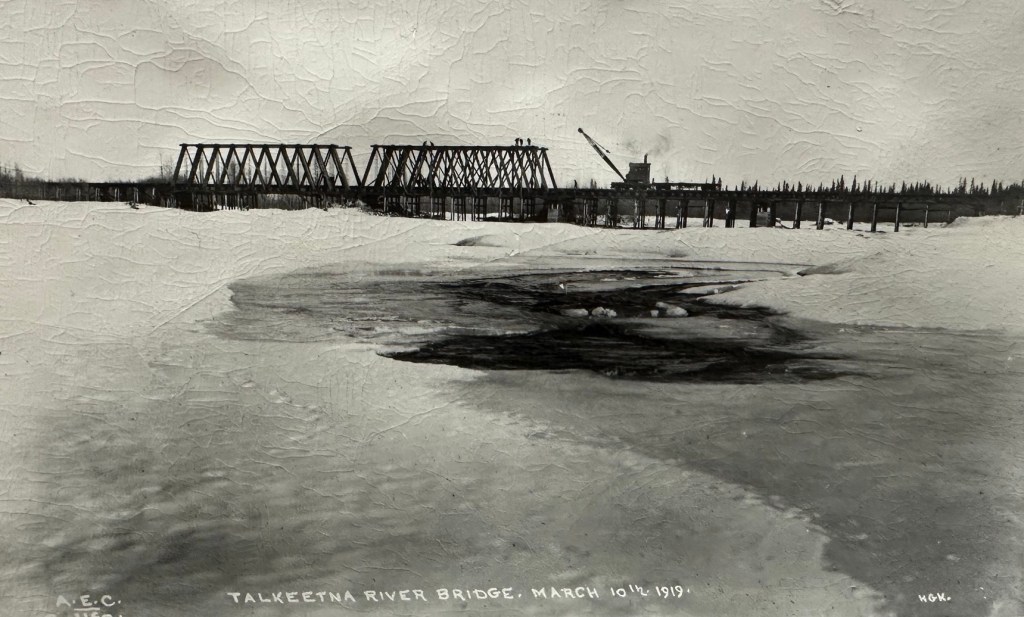


Aviation became a major part of the Talkeetna lifestyle from the 1930s onwards serving as a base for the bush pilots flying to remote destinations from nearby waterways and the village airstrip which is literally in the middle of the town. As glacier landings increased the village soon became the jumping off point for adventure seekers heading into the Alaska Range.


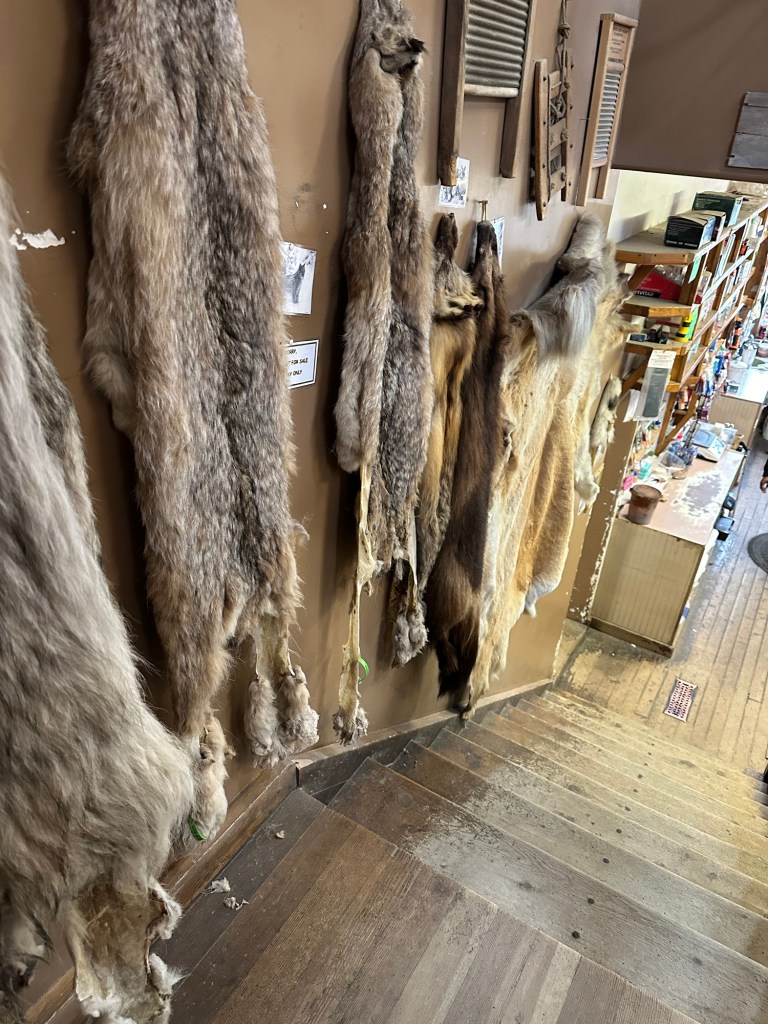
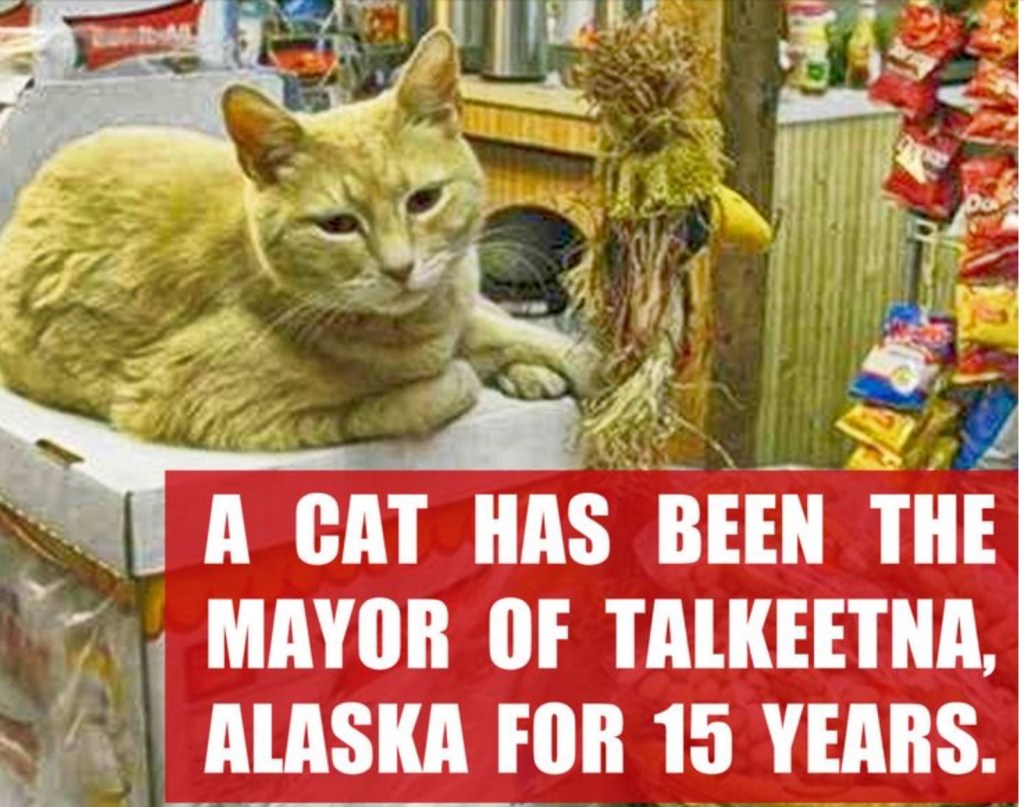

The strangest thing about Talkeetna is that they have a tradition of electing a cat to be Mayor.
 Phil and Carolynn's travel adventures
One response to “14 – Montana Creek and Talkeetna”
Cats rule!